






What's Happening?
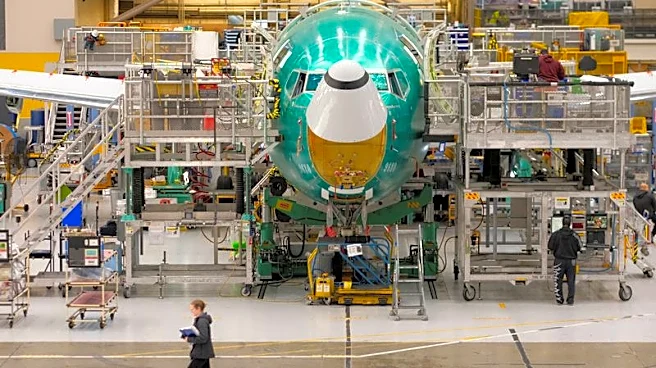
The Federal Aviation Administration (FAA) has determined that a software glitch affecting the Boeing 737 MAX aircraft does not pose a safety risk. This decision is significant for the certification of the 737 MAX 10, the largest variant in the MAX family,
which has faced delays. The glitch, identified as a problem introduced with the U14 version of the flight management system software, can cause the FMS screen to blank and reset. This issue primarily arises during a 'go-around' maneuver, where pilots abandon a landing and climb again. While it increases pilot workload by shifting the autopilot to a simpler level of automation for pitch control, the FAA concluded that pilots retain full control and the information displayed is clear and unambiguous. Several U.S. airlines, including Southwest Airlines, United Airlines, American Airlines, and Alaska Air, have stated they are not operating aircraft with the affected software version and some are not accepting new deliveries equipped with it. The smaller 737 MAX 7 was certified in August with the affected software.
Why It's Important?
The FAA's ruling is crucial for Boeing's financial stability and its efforts to strengthen its balance sheet. The 737 MAX 10, with over 1,500 orders, is a key product for the company, and its certification has been years behind schedule. This decision removes a significant regulatory hurdle that could have further delayed its entry into service. For airlines, the certification of the MAX 10 means access to a larger capacity aircraft, which can be vital for fleet modernization and expansion plans. The continued commitment of airlines to Boeing platforms, despite past issues, underscores the importance of these aircraft in the global aviation market. The resolution of this software issue also helps to rebuild confidence in the 737 MAX series, which has been under intense scrutiny following previous incidents. Delays in certification not only impact Boeing's revenue but also create uncertainty for airlines that have placed orders, affecting their operational planning and competitive positioning.
What's Next?
With the FAA's determination that the software glitch is not a safety concern, the path for the certification of the Boeing 737 MAX 10 appears clearer. Deliveries of the MAX 10 are anticipated to begin in 2027. The FAA has indicated it will consider further actions as needed, suggesting ongoing oversight of Boeing's software development processes. Boeing will likely focus on stabilizing output and deliveries across its 737 MAX and 787 programs, while also prioritizing safety and quality. Airlines that have held off on accepting deliveries with the U14 software may now re-evaluate their positions as the certification process progresses. The company's ability to execute on production and certification without further delays will be critical for its financial performance and for maintaining customer trust. The next version of the software, U14.2, is expected in 2028, with the FAA significantly stepping up its oversight of its development.
Beyond the Headlines
This development highlights the complex interplay between technological advancements, regulatory oversight, and commercial pressures in the aviation industry. The incident with the U14 software, though deemed not a safety risk, underscores the continuous challenges in developing and implementing sophisticated flight management systems. It also reveals the cautious approach taken by airlines, some of whom opted to delay accepting aircraft with the problematic software, demonstrating their heightened awareness of safety and operational integrity. The FAA's increased oversight of software development, particularly for future versions like U14.2, indicates a shift towards more rigorous scrutiny in the certification process. This could lead to longer development cycles for new aircraft technologies but ultimately aims to enhance safety and public confidence in air travel. The long-term implications include a potential re-evaluation of how software updates are managed and deployed across the aviation sector, emphasizing robust testing and validation protocols.