





What's Happening?
On Sunday, the U.S. dollar experienced an unexpected decline in Cuba's informal currency market, breaking a trend of several weeks of significant increases. As of 10:00 a.m. local time, the informal exchange rate placed the dollar at 926 Cuban pesos (CUP).
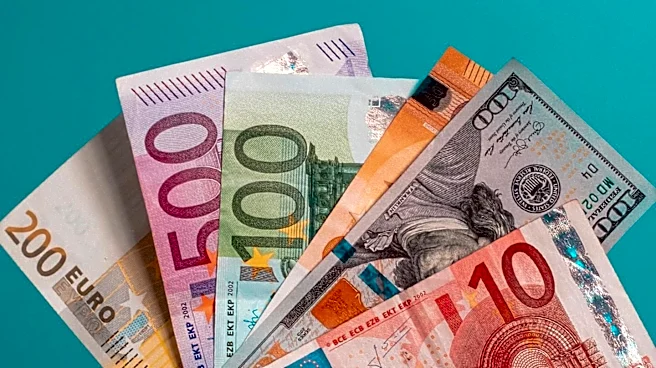
In contrast, the Euro maintained its value above 1,000 CUP, trading at 1,002 CUP, while the Freely Convertible Currency (MLC) saw a considerable increase, reaching 747 CUP. This represents an 87-peso rise for the MLC compared to its previous reference value, marking a 13.2% increase and accumulating a 178.5 CUP increase over the week. Despite the dollar's momentary dip, it remains 32 pesos higher than its value a week prior. The official exchange rates set by the Central Bank of Cuba for the Segment III are significantly lower, at 800 CUP per dollar and 892 CUP per euro, highlighting a substantial gap with informal market prices.
Why It's Important?
The volatility in Cuba's informal currency market reflects underlying economic instability and a lack of confidence in the national currency. The significant disparity between official and informal exchange rates indicates a thriving black market, which can undermine government economic policies and create challenges for businesses and individuals. The dollar's temporary decline, while notable, does not signal a sustained shift, suggesting continued uncertainty for those relying on remittances or engaging in foreign trade. The euro's sustained strength and the MLC's surge indicate a preference for more stable foreign currencies and convertible assets, further devaluing the Cuban peso. This situation impacts the purchasing power of ordinary Cubans, exacerbates inflation, and complicates economic planning for both the state and private sector, potentially leading to increased economic hardship and social discontent.
What's Next?
The immediate future of Cuba's informal currency market remains uncertain, with potential for continued volatility. The Central Bank of Cuba may face pressure to adjust official exchange rates further to narrow the gap with the informal market, though past adjustments have not eliminated the disparity. The behavior of the dollar, euro, and MLC will likely continue to be influenced by factors such as remittances, tourism, and the overall economic health of the country. Individuals and businesses will likely continue to navigate this dual exchange rate system, seeking the most favorable rates in the informal market. The government's response to these market dynamics, including any new monetary policies or regulations, will be crucial in shaping the economic landscape in the coming weeks and months.
Beyond the Headlines
The dynamics of Cuba's informal currency market are more than just economic indicators; they are a barometer of public trust and economic reality. The persistent gap between official and informal rates signifies a deep-seated lack of faith in the government's economic management and the stability of the national currency. This informal economy, driven by necessity, becomes a primary mechanism for many Cubans to access essential goods and services, often at inflated prices. The surge in MLC value suggests a growing reliance on digital foreign currency accounts, reflecting a broader shift in how Cubans manage their finances in a highly restricted economic environment. This parallel financial system can foster corruption, inequality, and further marginalize those without access to foreign currency, creating a complex socio-economic landscape where official policies often fail to reflect daily realities.