


What's Happening?
The Fall/Winter 2027/28 fashion season is characterized by 'controlled audacity' and a focus on personal agency, according to a FashionUnited trend report synthesizing forecasts from various industry experts. Three core narratives define the season: 'Remastered
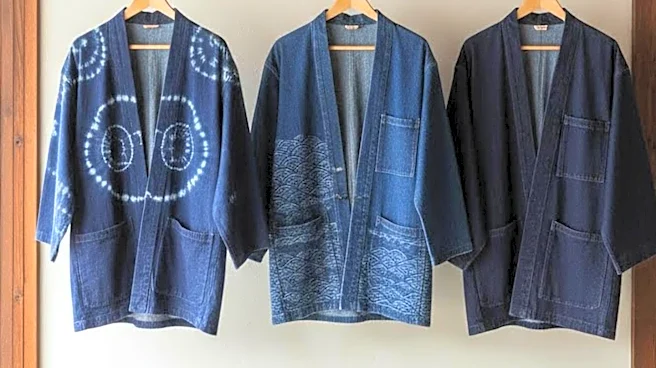
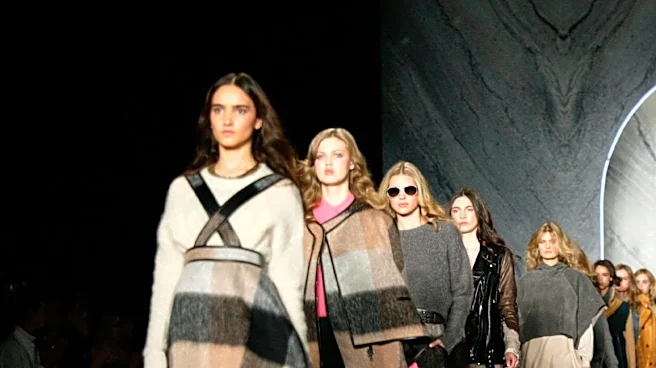
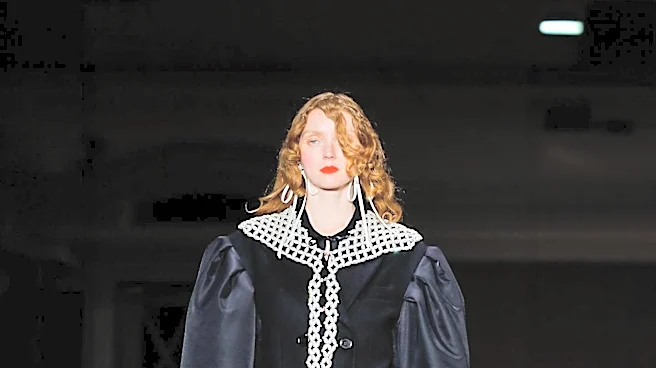
Familiarity,' which involves personalizing heritage codes; 'Dramatic Presence,' emphasizing opulence and volume; and 'Soft Armour,' focusing on hidden performance and sensory comfort in materials. These trends emerge as a response to a 'global polycrisis' and the increasing influence of AI, with consumers seeking stability, self-determination, and a return to tangible experiences. Key themes include 'Regrounding,' 'Fashion Becoming Fashion Again,' and 'Rediscovered Skills,' highlighting a counter-reaction to AI-driven homogenization and a renewed appreciation for traditional techniques.
Why It's Important?
These emerging fashion trends reflect broader societal shifts and consumer psychology in the U.S. and globally. The emphasis on 'personal agency' and 'controlled audacity' suggests that consumers are seeking ways to express individuality and reclaim control in an increasingly complex and digitally saturated world. The 'Remastered Familiarity' trend indicates a desire for comfort and stability through classic styles, but with a personalized twist, impacting how U.S. brands approach design and marketing. 'Dramatic Presence' points to a need for self-expression and confidence, potentially influencing the demand for bold silhouettes and luxurious materials. 'Soft Armour' highlights a growing preference for functional yet aesthetically pleasing clothing, driven by digital fatigue and a desire for connection with nature, which could lead to increased investment in innovative, comfortable, and sustainable materials by U.S. manufacturers and designers.
What's Next?
As the fashion industry moves towards Fall/Winter 2027/28, designers and retailers will likely integrate these trend narratives into their collections. We can expect to see more personalized interpretations of classic garments, a continued embrace of maximalist aesthetics, and a focus on materials that offer both comfort and hidden performance. The influence of AI on design processes will be balanced by a renewed appreciation for human craftsmanship and traditional techniques. Brands will need to cater to consumers who are increasingly seeking authenticity, individuality, and products that offer a sense of 'regrounding' amidst global uncertainties. This could lead to a greater emphasis on storytelling in marketing, highlighting the craftsmanship and unique qualities of garments, and a push for more sustainable and tactile material innovations.
Beyond the Headlines
The 'Age of Agency' and 'controlled audacity' trends suggest a deeper cultural commentary on the relationship between individuals and technology. In a world where AI is becoming ubiquitous, fashion is positioning itself as a realm for human expression, imperfection, and the rediscovery of tangible skills. The move towards 'Soft Armour' and 'hidden performance' in materials also reflects a desire for protection and comfort in an 'overcast zeitgeist,' indicating a psychological need for clothing that provides both physical and emotional security. This could lead to a re-evaluation of what constitutes 'luxury,' shifting from overt branding to intrinsic quality, ethical production, and the emotional connection a garment provides. The fashion industry, therefore, becomes a mirror reflecting broader societal anxieties and aspirations, offering a space for self-definition and resilience.