




What's Happening?
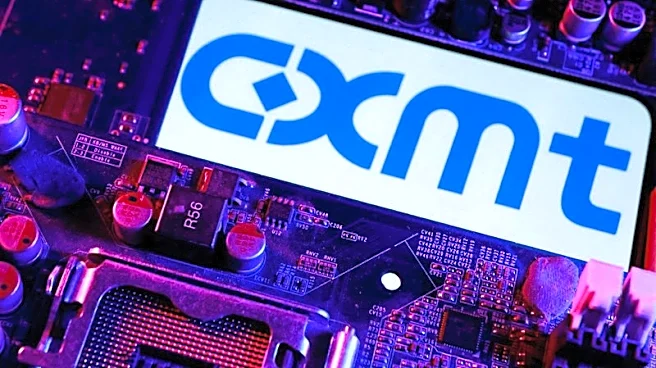
Micron Technology's stock experienced a significant drop of 5% following the successful IPO of China's ChangXin Memory Technologies (CXMT), which saw its shares surge by 466% on its first day of trading. This development has raised concerns about increased
competition in the memory chip market. CXMT's IPO, which raised $8.6 billion, positions it as a formidable competitor in the DRAM sector, a market where Micron has been a key player. The IPO has also impacted other memory and storage stocks, such as SanDisk and SK Hynix, which saw declines of 12% and 8%, respectively. The market reaction underscores fears that the new Chinese supply could pressure DRAM and NAND pricing, despite the recent surge in demand driven by AI applications.
Why It's Important?
The entry of CXMT into the market with a substantial financial backing poses a direct threat to established players like Micron. The increased competition could lead to a reduction in market share and pricing power for existing companies, potentially impacting their profit margins. This development is particularly significant as it comes at a time when the memory market is experiencing high demand due to AI and data center expansions. The ability of CXMT to produce competitive DRAM products could alter the dynamics of the global memory market, affecting pricing and supply chains. Companies like Apple, which are exploring CXMT's products, could further shift the balance in favor of the new entrant.
What's Next?
The market will closely watch how Micron and other established players respond to CXMT's entry. Potential strategies could include increasing production efficiency, investing in new technologies, or forming strategic partnerships to maintain competitiveness. Additionally, regulatory and trade policies could play a role in shaping the competitive landscape, especially concerning export controls and intellectual property rights. Investors and industry stakeholders will be keen to see if CXMT can sustain its momentum and how it will impact global supply chains and pricing structures in the long term.