






What's Happening?
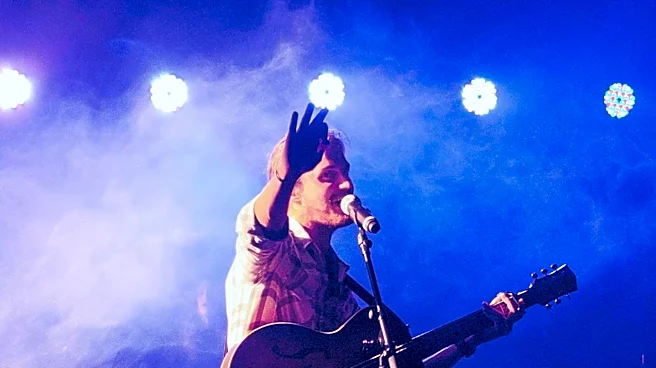
Momo Boyd, a member of the pop-rock quintet Infinity Song, is embarking on a solo career with her debut EP, 'Miss Michigan,' and a second EP in progress. Boyd is currently on tour, having completed the U.S. leg and preparing for European dates. Her solo sound
is described as folksy, emotional, and personal, contrasting with Infinity Song's more optimistic, guitar-driven melodies. Boyd acknowledges the challenges of exploring different sounds in an industry that often categorizes Black women's artistry narrowly. She has faced assumptions about her music, with some listeners labeling her the 'Black Lana Del Rey' and questioning her right to sing about 'Americanism' in her debut single, 'American Love Song.' Boyd's musical origins are rooted in her father's choirs in Michigan, and she later honed her skills in isolation after high school. Despite Infinity Song's viral success with 'Hater's Anthem' in 2023, Boyd's siblings fully support her solo endeavors. Her music delves into themes of self-doubt, avoidant tendencies, and lovelorn experiences, aiming to create a space where Black women's experiences are centered and celebrated.
Why It's Important?
Momo Boyd's solo career highlights the ongoing struggle for Black women artists to define their sound and identity within a music industry that often imposes restrictive categories. Her experience of being pigeonholed or having her artistry questioned due to her race echoes the challenges faced by other prominent Black female artists like Santigold, SZA, Beyoncé, Mickey Guyton, and Tanner Adell. This situation underscores the systemic issue of racial and gender bias in music, where artists are often expected to conform to preconceived notions rather than being allowed to explore diverse genres and themes. Boyd's deliberate choice to center her experiences and create music that reflects her personal truth, despite potential backlash, is a powerful act of artistic self-determination. Her work contributes to a broader movement of Black women artists reclaiming their narratives and challenging the industry to recognize the breadth and depth of their creativity, thereby expanding the landscape of American music and culture. Her journey also exemplifies the evolving dynamics of family bands, where individual members pursue solo projects while maintaining group ties.
What's Next?
Momo Boyd will continue her 'Miss Michigan' tour, with upcoming dates in Europe, including a stop in London in November. She is also working on a second EP, indicating a sustained commitment to her solo artistry. Her ongoing performances and new releases will be crucial in establishing her independent identity and expanding her fanbase beyond Infinity Song. The reception of her music and her continued public discourse on challenging industry perceptions will likely influence how other emerging Black female artists navigate their careers. As she continues to articulate her artistic vision, Boyd's work will contribute to the evolving conversation about diversity, representation, and creative freedom in the music industry. Her efforts to create a space where Black women are 'the moment' will be a key aspect of her artistic and cultural impact.
Beyond the Headlines
Momo Boyd's artistic journey delves into profound cultural and ethical dimensions, particularly concerning identity, representation, and the politics of art. Her experience of being told she 'talks like a white girl' in childhood and later having her 'American Love Song' questioned for its 'Americanism' due to her race reveals the insidious nature of racial gatekeeping and the pressure on Black artists to conform to specific cultural expectations. Boyd's decision to embrace her rural Michigan roots and challenge these assumptions is a powerful statement against cultural erasure and for the right to define one's own narrative. Her music, while deeply personal, becomes inherently political by asserting the validity of Black experiences within the broader American landscape, echoing the struggles of artists like Beyoncé in country music. This highlights the ongoing need for critical dialogue about who gets to define 'American' culture and how diverse voices are integrated or marginalized within it. Boyd's commitment to 'be a representation for Black women who desire freedom' speaks to a larger ethical imperative in art: to empower and validate marginalized communities, fostering a more inclusive and equitable cultural sphere.