




What's Happening?
A recent Empower study indicates that nearly 40% of working Americans have left retirement savings behind with old employers, and one in three have completely lost track of these accounts, a phenomenon termed 'retirement drift.' The study found that 39%
of Americans still hold retirement savings accounts with a previous employer, with 34% admitting they lost track of them. This issue is more prevalent among younger generations, affecting 50% of Gen Zers and 45% of Millennials, compared to 30% of Gen Xers and 14% of Boomers. Jane Bartosik, Empower's SVP, Wealth Solutions, noted that deciding what to do with a 401(k) from a previous employer often takes a backseat when starting a new job. The Government Accountability Office states that the average American changes jobs more than 10 times over a 40-year career, and indecision regarding these savings can impact retirement security.
Why It's Important?
The prevalence of 'retirement drift' poses a significant threat to the financial security of millions of Americans. Forgotten retirement accounts, totaling approximately $2.1 trillion across almost 32 million 401(k) accounts as of July 2025, are at risk of erosion by fees and stale asset allocation. This can lead to a substantial loss of potential retirement income over time. For individuals nearing retirement, having a large account not included in their financial plan can create a misleading picture of their overall wealth, potentially forcing them to delay retirement. The issue highlights a critical gap in financial planning and awareness, particularly among younger workers who are more likely to change jobs frequently. Addressing this problem is essential for ensuring that Americans can fully leverage their accumulated savings for a comfortable retirement.
What's Next?
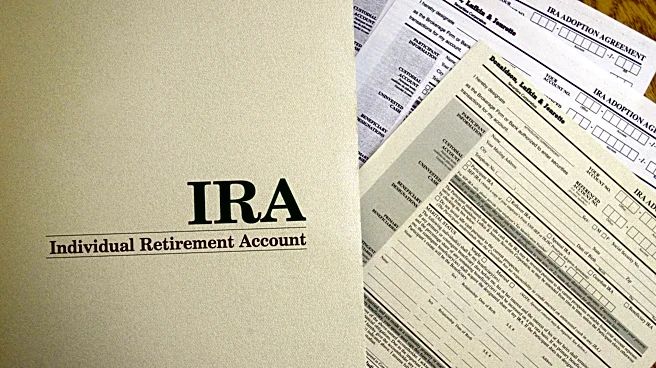
Individuals who have changed jobs are encouraged to actively track and manage their old retirement accounts. Options include rolling over funds into a new employer's plan, transferring them to an IRA, or leaving them with the old employer. Financial institutions and employers may need to enhance communication and provide clearer guidance on managing retirement savings during job transitions. Educational initiatives could also help raise awareness about the risks of 'retirement drift' and the benefits of consolidating or actively managing these accounts. For policymakers, the findings might prompt discussions on simplifying the process of managing retirement accounts across different employers to prevent such significant amounts of savings from becoming lost or neglected.
Beyond the Headlines
The 'retirement drift' phenomenon points to a broader challenge in personal finance: the increasing complexity of managing financial assets in a dynamic career landscape. As job mobility increases, the traditional model of a single, long-term employer-sponsored retirement plan becomes less relevant. This necessitates a more proactive and continuous approach to financial management by individuals. The issue also raises questions about the responsibility of employers and financial service providers in facilitating seamless transitions for retirement savings. The sheer volume of forgotten assets suggests a systemic problem that could have long-term economic consequences, potentially increasing reliance on social safety nets if a significant portion of the population's retirement savings is underutilized or lost. It underscores the need for robust financial literacy programs and user-friendly tools to help individuals keep track of their financial futures.