





What's Happening?
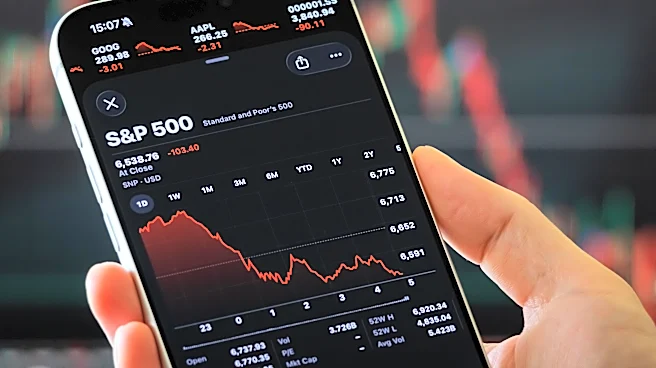
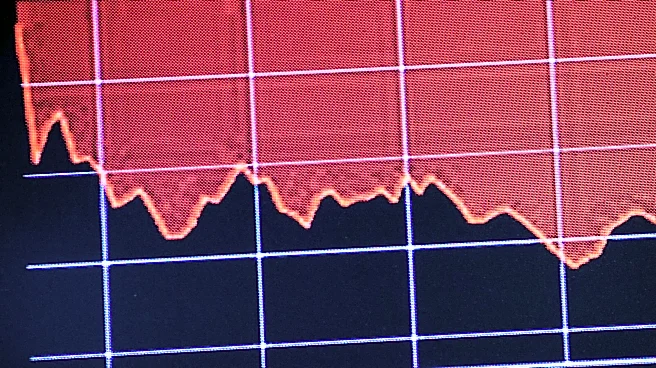
The S&P 500 concluded Friday at 6,910.39, marking a 265.44-point decline. This closing figure places the index below every year-end target set by major Wall Street firms for 2026. The index is now up less than 1% for the year, specifically 0.95% from
its 2025 close of 6,845.50. Creative Planning's Charlie Bilello noted on X that reaching the average target of 7,600 would necessitate a 10% rally by year-end, a scenario deemed unlikely given historical trends, as only four years since 1970 have seen a 10% rally from November 20 to year-end. The SPDR S&P 500 ETF Trust (SPY) experienced a 3.64% fall during the session, while the iShares Core S&P 500 ETF (IVV) and the Vanguard S&P 500 ETF (VOO) each fell approximately 7% for the week, mirroring SPY's performance due to their shared index holdings. The CBOE Volatility Index also saw a significant increase, closing Thursday at 28.44, up 52.1% in a week, indicating rising market fear.
Why It's Important?
This significant drop in the S&P 500 and its position below all Wall Street year-end targets for 2026 signals a potential shift in market sentiment and investor confidence. The fact that the index is up less than 1% for the year, coupled with a substantial increase in the CBOE Volatility Index, suggests growing apprehension among investors. This could lead to a more cautious approach to investments, potentially impacting retirement funds and individual portfolios. The unlikelihood of reaching the average year-end target of 7,600, based on historical data, implies that previous market forecasts might have been overly optimistic. This situation could prompt financial institutions and analysts to re-evaluate their projections and strategies, potentially leading to revised investment advice and a more conservative outlook for the near future. The performance of major ETFs like SPY, IVV, and VOO, which track the S&P 500, directly affects a broad range of investors, from institutional funds to individual retail investors.
What's Next?
The immediate future will likely see increased scrutiny of market performance and economic indicators. Investors and financial analysts will be closely watching for any signs of market stabilization or further declines. The current market conditions may lead to a re-evaluation of investment strategies, with a potential shift towards more defensive assets or a reduction in equity exposure. Financial firms may adjust their year-end targets and provide updated guidance to clients. The rising volatility, as indicated by the CBOE Volatility Index, suggests that market fluctuations could continue in the short term. The ability of the S&P 500 to recover any significant portion of its losses by year-end will depend on various factors, including corporate earnings, economic data, and broader geopolitical developments. A sustained period of underperformance could also influence consumer spending and business investment decisions, potentially impacting the broader U.S. economy.
Beyond the Headlines
The S&P 500's current performance, falling below all Wall Street year-end targets, highlights a potential disconnect between market expectations and reality. This situation could lead to a broader re-assessment of how financial forecasts are generated and communicated, especially if these targets were indeed 'too generous from the start.' The increased market volatility and investor fear could also have psychological impacts, potentially leading to panic selling or a prolonged period of market uncertainty. This scenario underscores the importance of diversified investment strategies and realistic expectations, particularly for long-term financial planning such as retirement income. The market's reaction to such significant drops can also reveal underlying vulnerabilities in the economic system or shifts in investor behavior that extend beyond immediate financial gains or losses, influencing regulatory discussions and public policy related to market stability and investor protection.