



What's Happening?
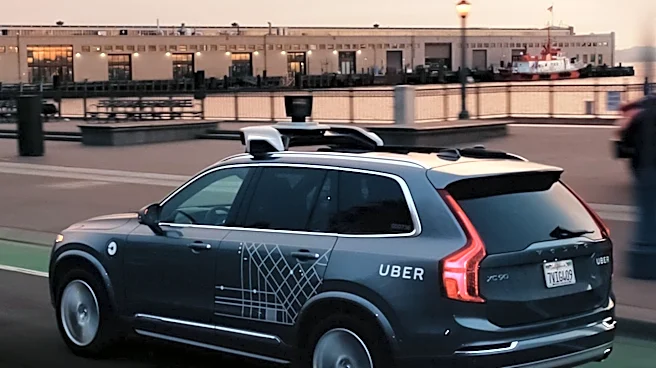
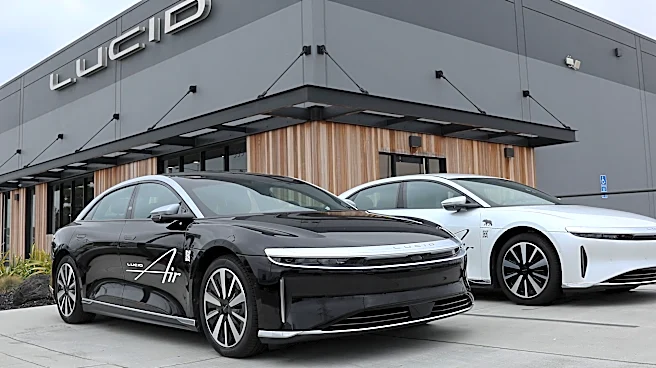
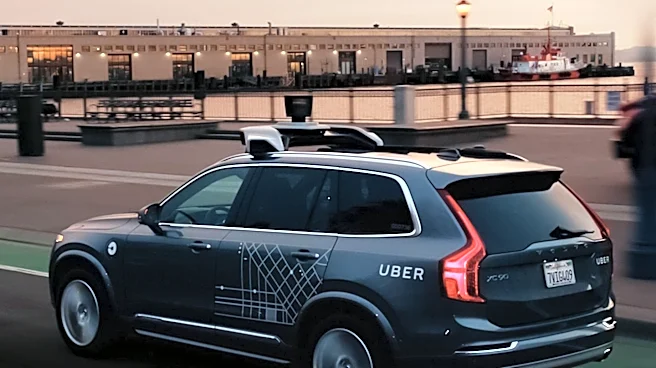
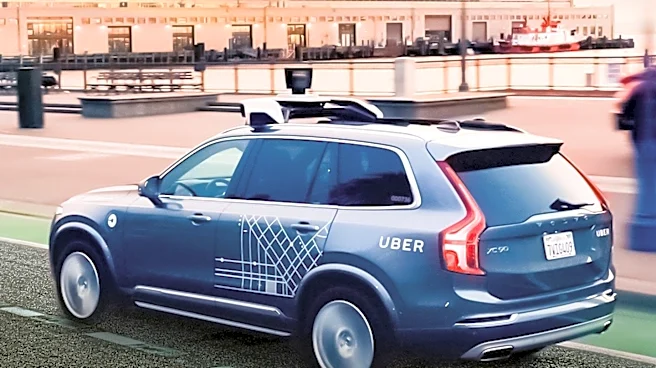
Nuro, Inc., a Silicon Valley-based physical AI company, in collaboration with EV manufacturer Lucid Group, Inc., and ride-hailing giant Uber Technologies, Inc., has commenced fully driverless testing of the Lucid Gravity robotaxi on public roads across
the San Francisco Bay Area. This development follows eleven months of supervised autonomous testing in the Bay Area and Houston, which included safety drivers. Nuro's 'Nuro Driver' software platform has been deemed ready for on-road testing without an in-vehicle safety driver. The initial phase of driverless testing will occur in Palo Alto, Mountain View, Los Altos, and Sunnyvale, with plans for expansion to other Bay Area cities next year. Employee rides in these driverless vehicles are expected to begin soon, with a public launch of the robotaxi service anticipated in Q1 2027. This initiative is part of a global robotaxi program announced in July 2025, integrating Lucid’s vehicle platform, Nuro’s Level 4 autonomy platform, and Uber’s ride-hailing network.
Why It's Important?
This driverless robotaxi testing marks a significant advancement in autonomous mobility, potentially reshaping urban transportation in the U.S. The collaboration between Nuro, Lucid, and Uber brings together expertise in AI, EV manufacturing, and ride-hailing, aiming to accelerate the deployment of self-driving services. For consumers, this could lead to more efficient, potentially safer, and eventually more affordable transportation options. For the automotive industry, it signifies a critical step towards widespread adoption of Level 4 autonomous vehicles, pushing competitors like Waymo, Zoox, and Tesla to further innovate. Uber's commitment to purchase at least 35,000 Lucid vehicles equipped with the Nuro Driver highlights a substantial investment in this technology, indicating a long-term shift in its operational model and a potential disruption to traditional human-driven ride-hailing services. The success of this program could also influence regulatory frameworks for autonomous vehicles across the U.S., setting precedents for safety and operational standards.
What's Next?
Following the current driverless testing phase, employee rides in the robotaxis are slated to begin shortly. The public launch of the robotaxi service in the San Francisco Bay Area is scheduled for Q1 2027. Beyond California, the partners intend to launch the service in Houston by mid-2027, with further expansion planned for dozens of additional markets globally in the coming years. Uber has secured a 50,000-square-foot depot in Houston to manage charging, maintenance, and other fleet operations for the Lucid Gravity robotaxis. The program also involves the development of future Lucid midsize vehicles integrated with the Nuro Driver platform. The in-cabin experience, designed by Uber, will offer personalization options and real-time autonomy visualization for riders. The ongoing testing and subsequent public rollout will provide crucial data and insights into the real-world performance and public acceptance of driverless ride-hailing services.
Beyond the Headlines
The deployment of fully driverless robotaxis raises profound implications beyond immediate transportation benefits. Ethically, the widespread use of autonomous vehicles necessitates ongoing discussions about accountability in the event of accidents and the societal impact of job displacement for professional drivers. Legally, the regulatory landscape for autonomous vehicles is still evolving, and the success of Nuro, Lucid, and Uber's program could influence the development of more comprehensive federal and state laws. Culturally, the public's trust and acceptance of driverless technology will be critical for its long-term success, requiring transparent communication about safety protocols and continuous improvement based on real-world data. This initiative also underscores a broader shift towards a 'software-defined vehicle' paradigm, where vehicle capabilities are increasingly determined by software and AI, potentially leading to new business models and partnerships across the automotive and technology sectors.