





What's Happening?
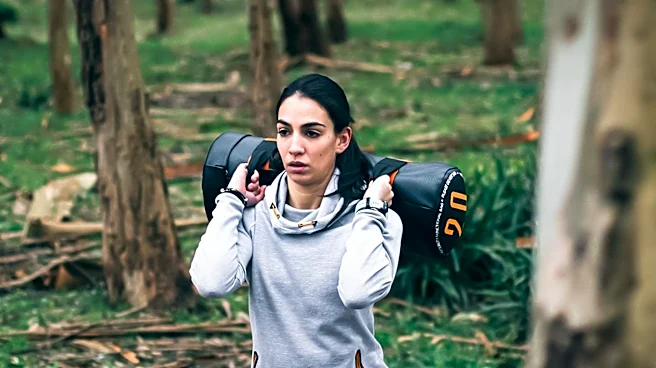
Rucking, a fitness activity involving walking with a weighted backpack, has seen a significant surge in popularity during 2024-2025, particularly on social media platforms like TikTok and Instagram. This exercise method, which burns more calories than
regular walking, combines both cardiovascular and resistance training benefits. The term 'rucking' originates from the German word 'rucksack' and was popularized by the U.S. military's 'ruck march' training, where soldiers carry heavy loads over long distances. In 2008, the fitness brand GORUCK, founded by a former U.S. Army Green Beret, commercialized this military exercise for the general public, selling weighted vests and rucksacks. Its appeal lies in its accessibility, as it can be performed without specialized gym equipment, simply by adding weight to a regular walk. This makes it an attractive low-impact workout option, especially for those seeking an alternative to running.
Why It's Important?
The growing popularity of rucking signifies a shift in fitness trends towards more accessible and integrated workout routines. For the U.S. fitness industry, this trend presents new market opportunities for manufacturers of weighted vests, backpacks, and related gear. It also highlights a consumer demand for exercises that offer dual benefits of cardio and strength training without requiring a gym membership or complex equipment. This could lead to increased participation in outdoor fitness activities and a broader demographic engaging in physical exercise, including individuals looking for joint-friendly alternatives to high-impact sports. The social media-driven adoption of rucking also underscores the power of digital platforms in shaping public health and wellness behaviors, potentially influencing how new fitness concepts are introduced and adopted by the masses.
What's Next?
As rucking continues to gain traction, it is likely to see further integration into mainstream fitness culture. We can anticipate an expansion in the market for specialized rucking equipment, including more ergonomic weighted vests and backpacks designed for comfort and efficiency. Fitness apps and communities dedicated to rucking challenges, such as the 'Ruck100' challenge, are expected to grow, fostering a sense of community and motivation among participants. Additionally, fitness professionals and organizations may begin to incorporate rucking into their training programs and events, potentially leading to organized rucking groups and competitions. The trend's low barrier to entry suggests it could become a sustained fitness staple, appealing to a wide range of individuals seeking effective and straightforward ways to improve their physical health.
Beyond the Headlines
The rise of rucking reflects a deeper societal interest in functional fitness and a return to more fundamental forms of physical activity. Its military origins lend it an aura of resilience and practicality, resonating with individuals seeking to build physical and mental toughness. This trend also subtly challenges the conventional gym-centric fitness model, promoting outdoor activity and leveraging everyday walking into a comprehensive workout. The emphasis on carrying weight, reminiscent of historical human endeavors, taps into a primal aspect of physical exertion, offering a sense of accomplishment and connection to a more rugged form of fitness. Furthermore, the community aspect, often seen in organized rucks or social media groups, highlights the human need for shared experiences and collective motivation in pursuing health goals.