



What's Happening?
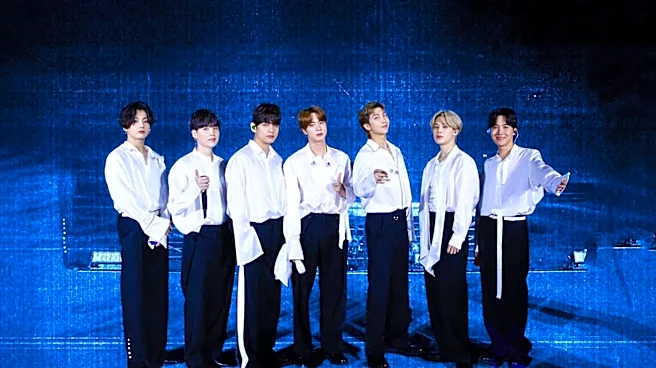
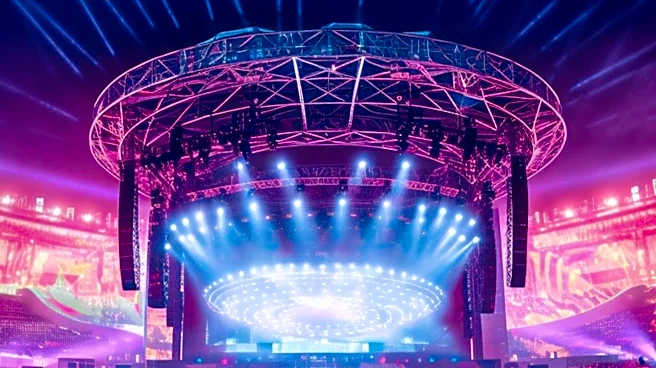
Shakira took the stage at the 2026 World Cup final held at MetLife Stadium in New Jersey, marking a significant moment in her career. Performing alongside other major artists like Madonna, Justin Bieber, and BTS, Shakira delivered a performance of her song
'Dai Dai,' with proceeds benefiting the FIFA Global Citizen Education Fund. This event was the first-ever halftime show at a World Cup final, featuring a custom Roberto Cavalli outfit designed by Fausto Puglisi. The performance was a nod to her previous World Cup appearance in 2010, where she performed 'Waka Waka.' Shakira's outfit was inspired by a vibrant color palette reminiscent of a sunset, incorporating over 200,000 Swarovski crystals.
Why It's Important?
The inclusion of a halftime show at the World Cup final represents a significant cultural shift, highlighting the event's growing influence beyond sports. Shakira's performance underscores the global reach of the World Cup, blending music and sports to create a broader entertainment spectacle. This move could set a precedent for future World Cup events, potentially increasing viewership and engagement. The collaboration with the FIFA Global Citizen Education Fund also emphasizes the role of such events in supporting global causes, enhancing the social impact of the World Cup.
What's Next?
Following this inaugural halftime show, there may be increased interest in integrating similar performances into future World Cup events. This could lead to more collaborations between artists and global sports organizations, expanding the entertainment value of such events. Stakeholders in the music and sports industries might explore new partnerships, leveraging the World Cup's platform to reach diverse audiences. Additionally, the success of this performance could inspire other major sporting events to adopt similar entertainment strategies.
Beyond the Headlines
The performance also highlights the evolving role of artists in global events, where music serves as a bridge between cultures. Shakira's choice to perform a song benefiting an educational fund reflects a growing trend of artists using their platforms for philanthropy. This development may encourage more artists to align their performances with social causes, enhancing the cultural significance of their work. Furthermore, the fashion aspect of the performance, with its intricate design and cultural references, underscores the intersection of fashion and global events.