



What's Happening?
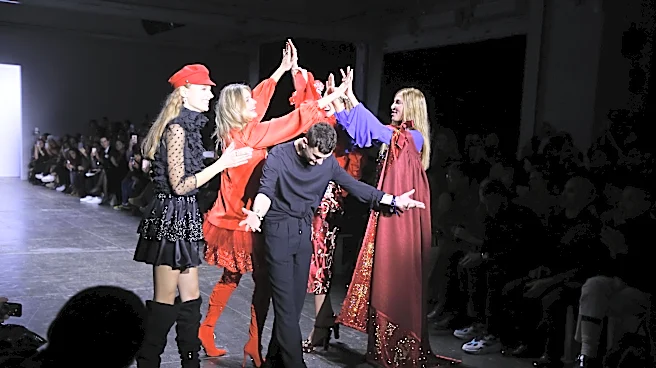
The New York Times is celebrating 175 years by reflecting on its extensive coverage of fashion trends through its editorials and photography. From its early documentation of styles, sometimes by happenstance, to dedicated sections like 'The Men’s Report'
in 1952 and 'T: The New York Times Style Magazine' today, the publication has captured the cyclical nature of fashion. Notable trends highlighted include animal prints, which evolved from high-society status symbols to screen-printed designs in the 1960s, and camouflage, transitioning from military utility to a countercultural and streetwear staple. The Times also notes the enduring presence of aviator glasses, shoulder pads, cutoff shorts, pleated pants, and the controversial socks-with-sandals combination. Fashion photographer Bill Cunningham's 'On the Street' column, which began in the 1980s, is recognized for capturing everyday styles, a mission continued by staff photographer Simbarashe Cha.
Why It's Important?
The New York Times' 175-year retrospective on fashion trends underscores the significant role media plays in documenting and influencing cultural shifts within the U.S. and globally. This historical archive provides valuable insights into how societal values, economic conditions, and technological advancements are reflected in clothing choices. The evolution of trends like animal prints and camouflage from specific functions to widespread fashion statements illustrates the dynamic interplay between utility, social expression, and commercialization in the fashion industry. For designers, retailers, and consumers, understanding these historical cycles can inform future trends, marketing strategies, and personal style choices. The continuous documentation by photographers like Bill Cunningham and Simbarashe Cha highlights the importance of street style in shaping mainstream fashion, demonstrating that trends often emerge from everyday life rather than solely from high fashion runways.
What's Next?
As The New York Times continues its coverage, it is expected to further document the ongoing evolution of fashion, including the emergence of new trends and the resurgence of older ones. The publication will likely continue to explore how global influences, sustainability concerns, and digital platforms impact fashion consumption and creation. Future editorials may delve into the increasing fluidity of gender in fashion, the role of technology in textile innovation, and the growing emphasis on ethical production. The ongoing work of photographers like Simbarashe Cha in capturing street style suggests a continued focus on how fashion is adopted and adapted by the general public, providing a real-time pulse on cultural aesthetics. The Times' historical perspective will remain a crucial lens through which to understand these future developments.
Beyond the Headlines
The New York Times' extensive fashion archive offers a deeper understanding of how fashion serves as a mirror to society, reflecting broader cultural, social, and political narratives. The cyclical nature of trends, as observed over 175 years, suggests that fashion is not merely about novelty but also about reinterpretation and nostalgia. This continuous re-evaluation of past styles raises questions about originality versus homage in design. Furthermore, the shift from high-society dictates to street-style influence highlights a democratization of fashion, where individual expression and subcultures increasingly shape mainstream aesthetics. The ethical implications of fashion, such as the move from real animal pelts to screen prints, also reveal evolving societal values regarding animal welfare and environmental impact, indicating a growing consciousness within the industry and among consumers.