








What's Happening?
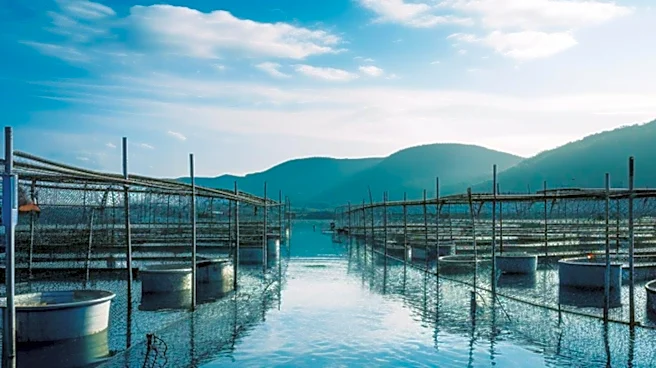
The global Recirculating Aquaculture System (RAS) market is projected to experience significant growth, driven by increasing seafood demand, regulatory constraints on traditional aquaculture methods, and advancements in land-based aquaculture technology.
According to a report by IndexBox, the market is expected to grow at a compound annual growth rate (CAGR) of 12.4% from 2026 to 2035. This growth is supported by large-scale salmon and shrimp RAS projects in North America, Europe, and Asia-Pacific. The electronics and automation components of these systems, such as sensors and cloud-based monitoring platforms, are becoming critical value drivers, accounting for a significant portion of RAS capital expenditure. The market is also seeing a shift towards modular, containerized RAS designs, which favor standardized electronic interface modules.
Why It's Important?
The expansion of the RAS market is crucial for meeting the rising global demand for seafood while addressing environmental concerns associated with traditional aquaculture methods. The shift towards land-based systems helps mitigate issues such as disease outbreaks and environmental degradation caused by open-net pen farming. This transition is particularly important in regions like North America, where consumer demand for sustainable seafood is high, and regulatory restrictions are tightening. The growth of the RAS market also presents opportunities for technological innovation and economic development, particularly in the electronics and automation sectors, which are integral to the operation of these systems.
What's Next?
As the RAS market continues to grow, we can expect further advancements in technology and increased investment in large-scale projects. The integration of Industrial Internet of Things (IIoT) platforms and energy-efficient components will likely become more prevalent, driving demand for high-quality electronic components. Additionally, the market may see increased vertical integration among system providers to address supply chain bottlenecks. Regulatory support for sustainable aquaculture practices will also play a key role in shaping the future of the RAS market.