







What's Happening?
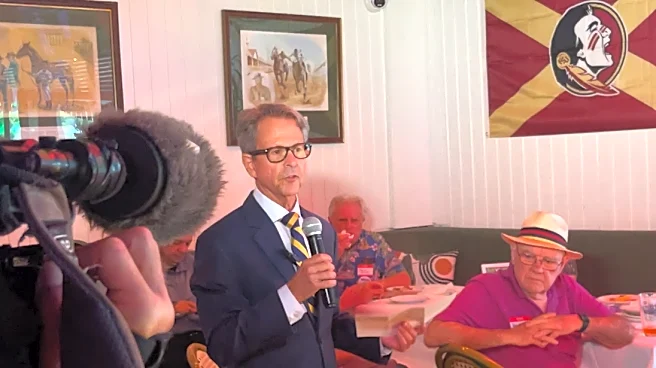
Lou DiBella, the managing general partner of the Richmond Flying Squirrels, has publicly criticized the Diamond District development, labeling the original promise as 'one big illusion.' DiBella expressed his dismay over what he perceives as a lack of transparency,
honesty, and mutual respect throughout the entire development process, particularly concerning the bidding phase. This statement comes as the Flying Squirrels' season concludes, with their home stadium, CarMax Park, expected to remain active year-round. Richmond officials, however, have stated that the Squirrels are not currently negotiating to share a ballpark with VCU, a claim the Flying Squirrels have countered by detailing a long timeline of negotiation efforts and asserting they are not obligated to continue 'futile' discussions.
Why It's Important?
DiBella's strong remarks highlight significant tensions and disagreements between the Richmond Flying Squirrels organization and city officials regarding the Diamond District project. This dispute could have substantial implications for the future of professional baseball in Richmond and the broader economic development of the area. A lack of transparency and trust in public-private partnerships can deter future investments and create a challenging environment for urban planning initiatives. The ongoing disagreement over ballpark sharing also raises questions about the long-term viability and community integration of the Diamond District, potentially affecting local businesses, residents, and sports fans. The project's success hinges on effective collaboration, and these public criticisms suggest a breakdown in that process.
What's Next?
The public criticism from Lou DiBella is likely to intensify scrutiny on the Diamond District development and the city's handling of the project. It may prompt further investigations or calls for greater transparency from community groups and local media. The Flying Squirrels' assertion that they are not required to continue 'futile' negotiations suggests a potential stalemate, which could delay or alter the project's timeline and scope. Stakeholders, including city council members, developers, and community leaders, will need to address these concerns to move forward. The future of the Flying Squirrels' involvement in the Diamond District, and potentially their presence in Richmond, could be impacted by how these disagreements are resolved.
Beyond the Headlines
This situation reflects a common challenge in urban development projects where public and private interests intersect. The 'illusion' described by DiBella points to potential discrepancies between initial promises and the realities of implementation, raising questions about accountability and governance. Such disputes can erode public trust in local government and development initiatives, making it harder to gain support for future projects. The long-term cultural and economic impact on Richmond, particularly its identity as a sports city, could be significant. The incident also underscores the importance of clear communication, robust negotiation, and transparent processes in large-scale urban planning to ensure equitable outcomes for all parties involved.