




What's Happening?
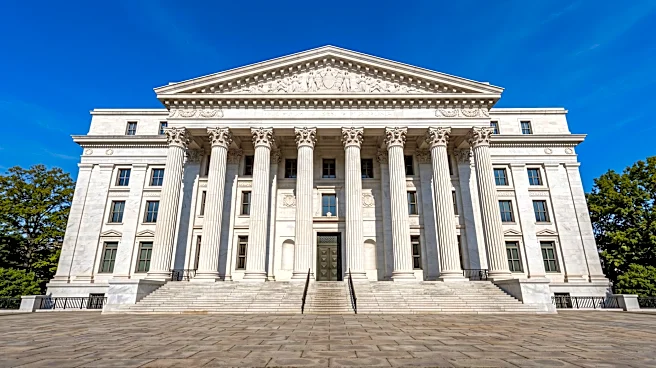
NYSE President Lynn Martin informed the House Financial Services Committee that the New York Stock Exchange (NYSE) is utilizing Anthropic PBC's Project Glasswing, an artificial intelligence model, to bolster its cybersecurity defenses. Responding to a question
from Michigan Representative Bill Huizenga about pressure-testing systems against coordinated cyber attacks, Martin stated that the initiative has already identified vulnerabilities and accelerated their resolution. She highlighted that the state-of-the-art technology has enabled the NYSE to quickly address various issues. Project Glasswing provides select partners with early access to Anthropic's Mythos AI model to reinforce their cyber defenses, though specific vulnerabilities found or their resolution timelines were not disclosed.
Why It's Important?
The NYSE's adoption of advanced AI for cybersecurity is crucial for maintaining the integrity and stability of U.S. financial markets. As a central hub for global trading, the NYSE is a prime target for cyber attacks, which could have far-reaching economic consequences, including market disruptions, loss of investor confidence, and significant financial losses. By leveraging AI, the NYSE aims to proactively identify and mitigate threats, ensuring the continuous and secure operation of its trading systems. This move underscores the increasing reliance on cutting-edge technology to protect critical financial infrastructure from evolving cyber threats, thereby safeguarding investor assets and the broader economy.
What's Next?
The NYSE's continued integration of AI into its cybersecurity framework suggests a trend towards more sophisticated and proactive defense mechanisms across the financial sector. Other major financial institutions are likely to follow suit, investing in similar AI-driven solutions to protect their systems. This development could lead to a new standard in cybersecurity practices within the financial industry, emphasizing continuous threat detection and rapid response capabilities. Further collaboration between AI developers and financial entities can be expected, driving innovation in cyber defense technologies and potentially influencing regulatory requirements for cybersecurity in critical infrastructure sectors.
Beyond the Headlines
The NYSE's use of AI for cybersecurity highlights a broader shift in how critical infrastructure is protected in the digital age. Beyond the immediate security benefits, this adoption raises important questions about the role of AI in autonomous decision-making within highly sensitive systems and the potential for new types of vulnerabilities that AI itself might introduce. It also underscores the growing arms race between cyber attackers and defenders, where AI becomes a key tool for both sides. The ethical implications of AI in security, including data privacy and algorithmic bias, will likely become more prominent as these technologies become more integrated into essential services, prompting ongoing discussions about governance and oversight.