
What's Happening?
Users of Grok Bot are requesting new features for the bot's integrated email address (@mail.grokbot.com). Currently, there is no direct inbox view within the Grok Bot application, meaning users must query
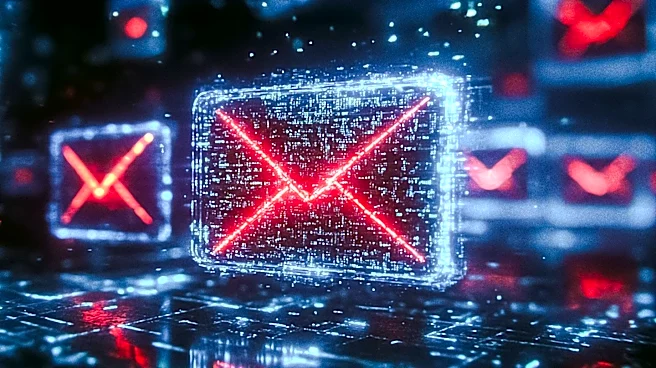
the bot to see received emails. This process consumes a 'chat turn,' which users aim to conserve. A significant concern is the handling of emails classified as spam. Legitimate emails, such as verification codes or replies, that are incorrectly flagged as spam are silently missed because they do not trigger the bot or initiate routines. This is understood to be a safety measure, but it leads to missed communications. Users are seeking an opt-in option to allow email routines to run for spam-held mail from specific senders or domains, a 'Not spam / always allow this sender' action, or at least a notification when mail is held as spam. These requests aim to improve the usability and reliability of Grok Bot's email functionality for team accounts using the desktop app.
Why It's Important?
The proposed features for Grok Bot's email address are important for enhancing user efficiency and preventing critical communication failures. For businesses and teams relying on Grok Bot for automated workflows and communications, the inability to easily view incoming emails or manage spam classifications can lead to significant operational disruptions. Missed verification codes could halt essential processes, and unanswered replies could damage client relationships or internal project timelines. Implementing an inbox view would reduce the need for constant bot queries, saving valuable chat turns and streamlining workflow management. Furthermore, better spam management would ensure that legitimate communications are not inadvertently blocked, thereby improving the overall reliability and trustworthiness of the bot's email capabilities. This directly impacts productivity and the seamless execution of automated tasks, which are crucial for organizations leveraging AI tools.
What's Next?
The next steps would involve Grok Bot's development team evaluating these feature requests. If adopted, the development process would likely include designing and implementing an inbox view within the application interface. Concurrently, the team would need to develop the backend logic for spam management features, such as whitelisting senders or providing notifications for held mail. This could involve updates to their email filtering algorithms and user interface elements for managing these settings. User testing and feedback would be crucial during the development phase to ensure the new features meet user expectations and integrate seamlessly with existing functionalities. Communication from Grok Bot to its user base regarding the status of these requests and any planned updates would also be anticipated, potentially through their community forums or official announcements.
Beyond the Headlines
The requests for improved email management within Grok Bot highlight a broader trend in AI-powered tools: the need for robust, user-friendly interfaces that complement powerful automation. As AI bots become more integrated into daily business operations, the expectation for them to handle complex tasks, including email communication, with human-like reliability increases. The 'silent failure' of legitimate emails being caught in spam filters without notification points to a critical design challenge in AI systems – balancing security with usability. This situation underscores the importance of transparency and user control in automated systems. Users need to understand why certain actions are taken (e.g., why an email is marked as spam) and have the ability to override or refine these decisions. This feedback loop is essential for the continuous improvement and adoption of AI tools, ensuring they serve as true productivity enhancers rather than sources of frustration or missed opportunities.