








What's Happening?
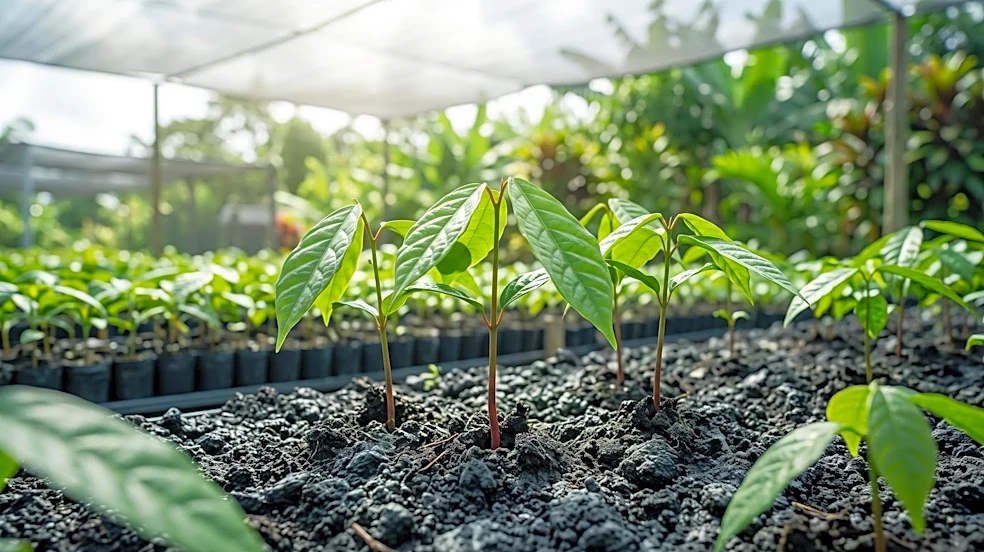
President William Ruto has officially launched cocoa farming as a high-value cash crop in Kenya. The announcement was made at the Kenya Seed Farm in Endebess, Trans Nzoia County, where the President outlined plans to integrate cocoa cultivation into the national
tree-growing program. This initiative is positioned as a dual strategy to boost farmer incomes and meet environmental restoration goals. Research data cited by the Kenya Forestry Research Institute (KEFRI) suggests cocoa can generate approximately KSh 552,000 per acre annually, significantly surpassing traditional crops like coffee, tea, and maize. The government plans to support this rollout by having the Kenya Agricultural and Livestock Research Organisation (KALRO) and the Kenya Plant Health Inspectorate Service (KEPHIS) multiply and distribute quality cocoa seedlings. Additionally, an aerial seeding program and the JazaMiti digital platform were unveiled to aid in restoring degraded forest land and achieving the country's 15-billion-tree target.
Why It's Important?
The introduction of cocoa as a major cash crop represents a significant diversification of Kenya's agricultural sector, which has historically relied heavily on tea, coffee, and maize. This move aims to provide farmers with a more lucrative alternative, potentially transforming rural livelihoods and reducing poverty. The high earning potential of cocoa, as projected, could attract substantial investment in the agricultural sector and create new value chains. Furthermore, integrating cocoa cultivation with the national tree-growing program offers a sustainable approach to economic development, linking income generation with environmental conservation. This strategy could help address climate change challenges while simultaneously improving food security and economic stability for farming communities. It also signals a strategic shift towards high-value crops to enhance agricultural output and export potential.
What's Next?
The government will proceed with the national rollout of cocoa farming, with KALRO and KEPHIS playing a crucial role in seedling multiplication and distribution. Farmers in identified suitable regions across Kenya will be encouraged and supported to adopt cocoa cultivation. The aerial seeding program and the JazaMiti digital platform will be implemented to accelerate forest restoration efforts. Success will depend on effective farmer training, market access for cocoa beans, and sustained government support for research and development. The economic impact on rural communities and the overall contribution to Kenya's GDP will be closely monitored. This initiative is expected to be a long-term project, with initial yields and market integration taking several years to fully materialize.
Beyond the Headlines
The launch of cocoa farming as a national cash crop signifies a broader strategic vision to align agricultural productivity with environmental sustainability. By promoting a crop that thrives in forest environments, the government is attempting to create a symbiotic relationship between economic activity and ecological preservation. This approach could serve as a model for other developing nations seeking to balance economic growth with climate action. However, successful implementation will require careful planning to avoid potential pitfalls such as market saturation, price volatility, and the need for robust processing infrastructure. The initiative also highlights the importance of agricultural research and innovation in identifying and promoting crops that offer both economic viability and ecological benefits, fostering a more resilient and sustainable agricultural sector.