



What's Happening?
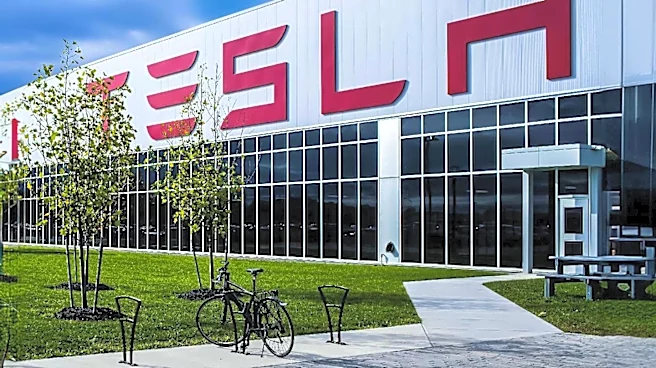
Tesla's German subsidiary, Tesla Manufacturing Brandenburg SE, concluded the 2025 fiscal year with a net profit of €77.1 million, an increase from €56.8 million the previous year, despite a decline in production and revenue. The company reported a decrease
in revenue from approximately €7.7 billion to €7.1 billion, and production fell by about 9,000 vehicles to 202,000 units. This decline was attributed to restructuring and model changes, including the introduction of new Model Y variants. Tesla plans to ramp up production significantly in 2026, aiming for 7,500 vehicles per week, equating to 375,000 vehicles annually. The company is also expanding its workforce and battery cell production capacity at the Grünheide plant.
Why It's Important?
Tesla's ability to increase profits despite lower production highlights its operational efficiency and strategic planning. The planned production ramp-up and expansion of battery cell manufacturing are crucial for Tesla to maintain its competitive edge in the electric vehicle market. This expansion could enhance Tesla's market share in Europe and support its global supply chain. The increase in production capacity and workforce also indicates Tesla's commitment to long-term growth and innovation in the electric vehicle sector. However, the expansion faces challenges such as geopolitical tensions and potential supply chain disruptions, which could impact Tesla's operations and profitability.
What's Next?
Tesla plans to increase its production capacity at the Grünheide plant to 7,500 vehicles per week by 2026. The company is also expanding its battery cell production capacity to 18 GWh annually, with production expected to begin in the first half of 2027. Tesla aims to recruit an additional 1,000 employees for vehicle production and 1,500 for battery cell manufacturing. These expansions are intended to serve more than 30 markets, with further expansions planned. The success of these initiatives will depend on overcoming challenges such as geopolitical tensions and supply chain disruptions.