




What's Happening?
FIFA has announced plans to create a new commercial subsidiary valued at $20 billion, named FIFA Forward Enterprise (FFE), which aims to consolidate its commercial and event operations. This proposal has drawn significant criticism from UEFA, the governing
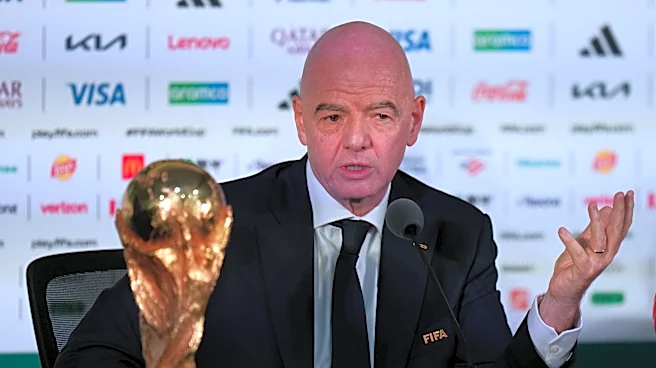
body of European soccer, which argues that the plan crosses a line that football's governing institutions should not cross. UEFA's concerns center around the lack of transparency regarding financial gains and the potential compromise of football's governance and integrity. FIFA President Gianni Infantino has defended the proposal, stating that it aims to democratize football worldwide by allowing member associations to seek a fair share of available funding. The proposal will be presented to FIFA's 211 member associations and the FIFA Council for final decision-making.
Why It's Important?
The proposal by FIFA to create a $20 billion commercial subsidiary has significant implications for the governance and financial structure of global football. UEFA's opposition highlights concerns about the potential erosion of football's integrity and governance, as the plan involves selling stakes in FIFA competitions. This move could shift the balance of power and financial control within the sport, affecting leagues, clubs, players, and fans worldwide. The lack of transparency in financial dealings raises questions about who stands to benefit from the proposal, potentially leading to conflicts of interest and undermining trust in football's governing bodies. The outcome of this proposal could set a precedent for how commercial interests are managed in sports governance.
What's Next?
FIFA's proposal will be presented to its 211 member associations and the FIFA Council, which will be the sole decision-makers on the matter. The response from these stakeholders will be crucial in determining the future of the proposal. UEFA and other national football associations may continue to voice their concerns and seek to influence the decision-making process. The potential involvement of external investors in FIFA's commercial operations could lead to further scrutiny and debate over the governance and financial transparency of the sport. The outcome of this proposal could have long-term implications for the structure and governance of global football.