

What's Happening?
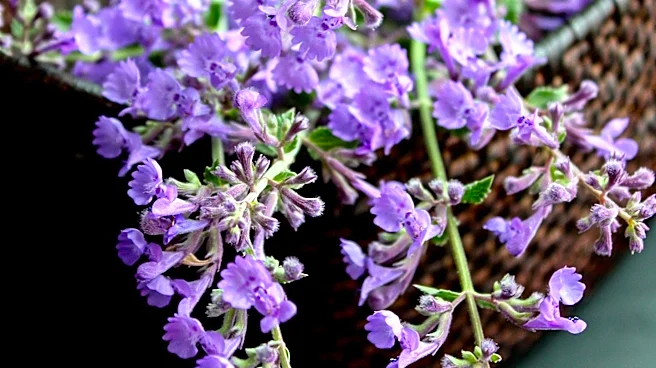
Catmint, a plant often mistaken for lavender due to its similar appearance, is gaining popularity as a garden staple. Known for its soft purple-blue flowers and aromatic foliage, catmint offers a longer blooming period compared to traditional lavender,
flowering from late spring to early fall. Unlike lavender, catmint does not develop woody stems, making it easier to maintain. This perennial is drought-tolerant and attracts pollinators such as bees and butterflies, providing an extended food source throughout the growing season. Gardeners appreciate catmint for its ability to create a romantic, hazy effect in gardens, similar to lavender, but with less maintenance.
Why It's Important?
The rise of catmint as a preferred garden plant highlights a shift in gardening preferences towards low-maintenance, high-impact perennials. Its extended bloom time and ease of care make it an attractive option for gardeners looking to maintain vibrant gardens with minimal effort. The plant's ability to attract pollinators also supports biodiversity and ecological health, aligning with growing environmental awareness. As gardeners seek alternatives to traditional plants that require more upkeep, catmint's popularity could influence landscaping trends and encourage the adoption of more sustainable gardening practices.