







What's Happening?
Across Ohio, mending groups are emerging as a community-led effort to combat textile waste and the rapid consumption driven by fast fashion. Organizations like Crunchy Leaves Sustainability Collaborative in Cincinnati host 'Mending Mondays,' where participants,
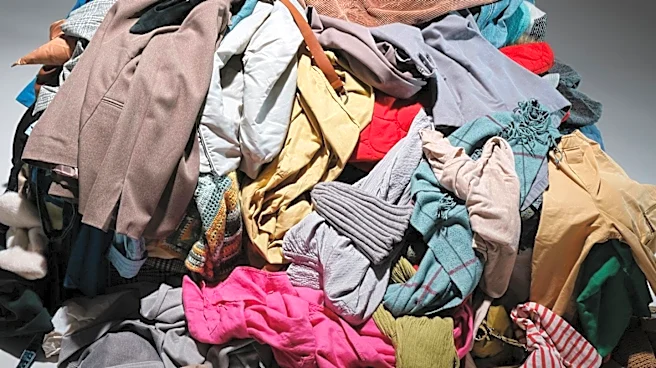
largely Gen Z and millennials, learn and practice clothing repair skills. Ally Algiers, a co-leader of Mending Mondays, teaches techniques such as Sashiko mending, which visibly repairs garments with decorative stitching, and darning, which aims to seamlessly patch holes. Similar initiatives are found in Bay Village and Granville, indicating a growing trend. These groups aim to revive traditional mending skills, which many participants feel are becoming lost, and to divert clothing from landfills. The United Nations reports that 92 million tons of textile waste are produced globally each year, with much of it ending up in landfills or being shipped to lower-income countries, contributing to greenhouse gas emissions like methane.
Why It's Important?
The rise of mending groups in Ohio signifies a growing public awareness and proactive response to the environmental impact of the fast fashion industry in the U.S. Fast fashion's model of mass-producing inexpensive, often low-quality clothing encourages frequent consumption and disposal, leading to significant textile waste. These local initiatives empower individuals to extend the lifespan of their garments, directly reducing their personal contribution to landfills and promoting a more sustainable lifestyle. This movement challenges the prevailing consumer culture by emphasizing repair over replacement, fostering a sense of community, and preserving practical skills. For consumers, it offers an alternative to constant purchasing, potentially saving money and encouraging a more mindful approach to clothing. For the broader society, it represents a grassroots effort to mitigate environmental damage caused by textile pollution and resource depletion.
What's Next?
The trend of mending groups is likely to continue expanding as environmental consciousness grows and the economic pressures of inflation make repairing items more appealing than buying new ones. These groups could evolve into broader community hubs for sustainability, potentially offering more workshops on other repair skills or hosting clothing swap events. Increased participation might also lead to greater advocacy for sustainable practices within the fashion industry, pushing for more durable products and better recycling infrastructure. Local governments or environmental organizations might also recognize the value of these initiatives and offer support, such as funding for workshops or public awareness campaigns. The long-term impact could be a cultural shift towards valuing longevity and craftsmanship in clothing, moving away from the disposable mindset fostered by fast fashion.
Beyond the Headlines
Beyond the immediate environmental benefits, the resurgence of mending groups touches upon deeper societal and cultural implications. It represents a reclamation of traditional skills and a rejection of hyper-consumerism, fostering a sense of self-sufficiency and creativity. In an increasingly digital world, these in-person meetups provide valuable opportunities for community building and social connection, addressing a growing need for tangible, shared experiences. Ethically, it highlights a critique of labor practices often associated with fast fashion, as consumers become more aware of the true cost of cheap clothing. Legally, increased public awareness could eventually lead to policy discussions around textile waste management, producer responsibility, and sustainable manufacturing standards. Culturally, it signifies a potential shift in aesthetic values, where visible mends become a mark of character and sustainability rather than imperfection, challenging conventional notions of 'new' and 'perfect' in fashion.