
What's Happening?
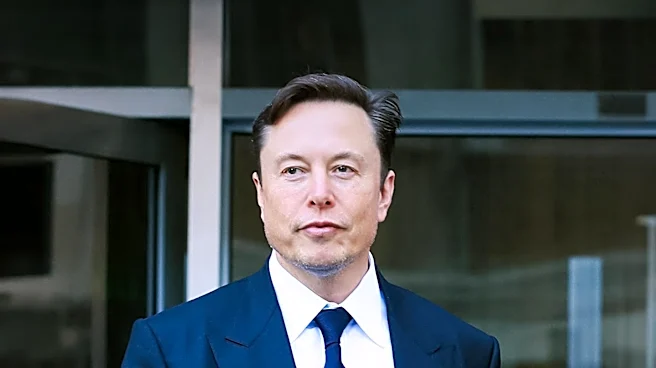
Roelof Botha, a former PayPal CFO and current board member of SpaceX, is leading one of the independent special committees negotiating a potential all-stock merger between SpaceX and Tesla. This proposed merger could create a combined entity valued at approximately
$3.5 trillion, which would be the largest corporate merger on record. The negotiations are being conducted by two special committees, formed in October, to ensure compliance with Texas corporate governance rules, which bar Elon Musk from direct participation due to his conflicted party status. Botha, alongside Randy Glein, advises the SpaceX committee, while Tesla's committee is led by Robyn Denholm, Kathleen Wilson-Thompson, and Jack Hartung, advised by Evercore. Discussions are reportedly aiming for a potential agreement by December 31, ahead of a new U.S. Congress taking office in January, though a final agreement has not yet been reached. The central focus of these negotiations is the relative share valuations and the final exchange ratio for the all-stock swap.
Why It's Important?
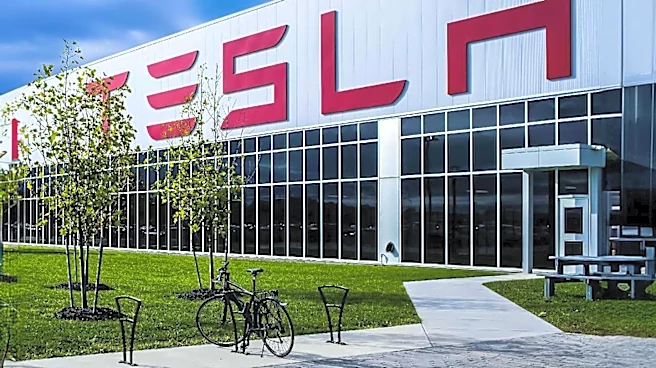
This potential merger holds significant implications for the U.S. technology and automotive sectors, as it would combine Tesla’s electric vehicles, energy storage, and Optimus robotics with SpaceX’s launch vehicles, Starlink satellite network, and AI infrastructure. Such a consolidation would create an unmatched 'Physical AI' and space-compute powerhouse, potentially redefining market leadership in several advanced technology domains. For investors, the merger's structure as an all-stock swap means that relative share valuations and the exchange ratio are critical, directly impacting shareholder value. Elon Musk's voting control is also a key factor, as he holds significantly more voting power in SpaceX (over 80%) compared to Tesla (roughly 20%). The agreed-upon governance framework will determine his influence over the combined entity, with estimates suggesting his voting stake could exceed 50%. The merger also presents complex regulatory hurdles, particularly concerning the ring-fencing of Tesla’s manufacturing operations in China from SpaceX’s classified U.S. defense contracts, which could have national security implications.
What's Next?
The independent committees are working towards a December 31 target for a potential agreement, though a final deal is not yet close. Tesla’s annual shareholder meeting on December 3 will be closely watched by investors for any updates on the talks, even though a formal merger vote is not on the published ballot. Any definitive merger agreement would necessitate a separate proxy filing and approval from over 50% of all outstanding Tesla shares at a future special meeting. Beyond the immediate negotiations, the companies will need to address major regulatory challenges, especially regarding the interplay between Tesla's operations in China and SpaceX's U.S. defense contracts. The market performance of SpaceX, which is currently trading below its June 2026 IPO price of $135, will also be a factor as negotiations continue.
Beyond the Headlines
The proposed merger between Tesla and SpaceX represents a significant convergence of terrestrial and space-based technologies, potentially accelerating advancements in AI, robotics, and space exploration under a single corporate umbrella. This could lead to unprecedented synergies in research and development, manufacturing, and market reach. However, the sheer scale and complexity of the combined entity, valued at $3.5 trillion, raise questions about market concentration and potential antitrust scrutiny. The challenge of integrating two distinct corporate cultures, one focused on consumer automotive and energy, and the other on aerospace and satellite communications, will be substantial. Furthermore, the national security implications of combining a company with significant manufacturing presence in China (Tesla) with one holding critical U.S. defense contracts (SpaceX) will require careful navigation and could set new precedents for regulatory oversight in cross-sector mergers involving sensitive technologies.