




What's Happening?
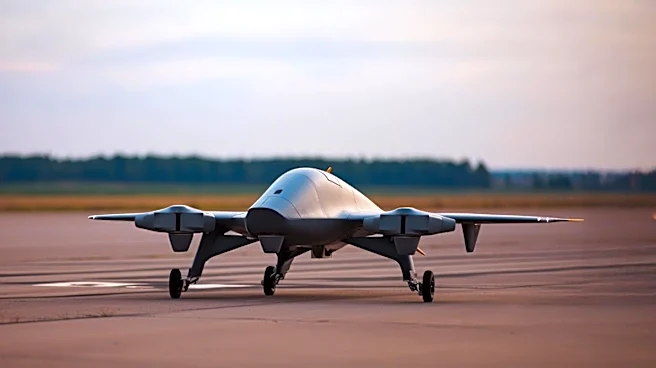
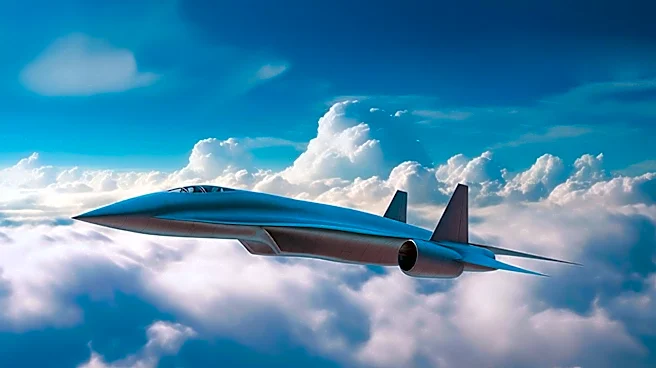
Boeing's MQ-28 Ghost Bat, an uncrewed combat aircraft developed by Boeing Defence Australia, made its debut at the Farnborough International Airshow. The aircraft, which resembles a small fighter jet, is designed to operate alongside crewed jets, enhancing
their capabilities through advanced human-machine teaming. The Ghost Bat participated in Exercise Valiant Shield 2026, where it flew with U.S. Pacific Command forces, supporting the U.S. Air Force's Experimental Operation Unit. The aircraft demonstrated its combat capabilities by successfully firing an AIM-120 AMRAAM missile to destroy a drone. With a range of over 2,000 nautical miles, the Ghost Bat is equipped for missions such as surveillance and electronic warfare, and it can reach altitudes exceeding 40,000 feet.
Why It's Important?
The introduction of the MQ-28 Ghost Bat at the Farnborough Airshow marks a significant advancement in military aviation, highlighting the growing role of autonomous systems in modern warfare. The aircraft's ability to operate in conjunction with crewed jets represents a strategic shift towards integrating uncrewed systems into military operations, potentially enhancing the effectiveness and reach of air forces. This development is particularly relevant as global military powers, including the U.S., seek to maintain a technological edge over near-peer rivals like China. The Ghost Bat's capabilities could lead to more efficient and flexible military operations, reducing the risk to human pilots while expanding operational possibilities.
What's Next?
Following its successful debut, the MQ-28 Ghost Bat is expected to undergo further testing and integration into military exercises. The U.S. Air Force and other military branches may explore additional applications for the aircraft, potentially expanding its role in various combat and support missions. As the demand for uncrewed systems grows, Boeing and other defense contractors are likely to continue developing and refining similar technologies, aiming to enhance the capabilities of military forces worldwide. The integration of such systems could also influence future military procurement and strategy, as nations adapt to the evolving landscape of aerial combat.