






What's Happening?
Experts are emphasizing the importance of incorporating diverse stretching routines into daily life to improve flexibility, increase range of motion, and prevent injuries. Zaki Afzal, a sports PT and founder of Optimize Physical Therapy and Performance,
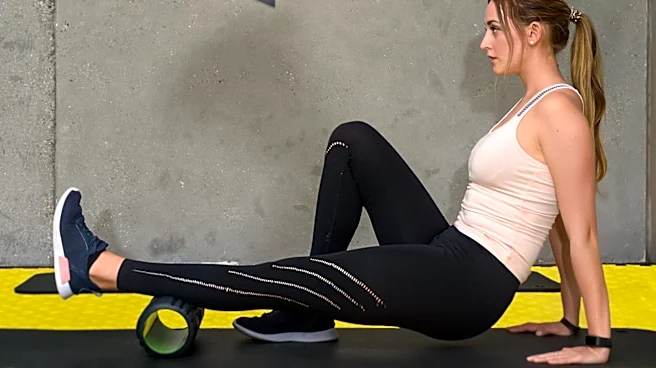
has designed a 10-minute full-body dynamic stretch routine suitable for pre-cardio or lifting, requiring minimal equipment. This routine targets areas prone to stiffness from sitting and training. Another recommended routine includes 'Reach and Roll' for the rib cage and mid-back, and 'World's Greatest Stretch' for hips, adductors, thoracic spine, and hamstrings. Stretching should ideally be performed before and after workouts, with each stretch held for 30-40 seconds over 10 to 15 minutes. It is safer and more effective to stretch warm muscles and maintain full control during the hold. Static stretching is best reserved for post-training or dedicated flexibility sessions. The Moova app also offers guided 5-minute desk stretch routines to combat stiffness from prolonged sitting, emphasizing the scientific backing of these routines in offsetting sedentary lifestyle risks.
Why It's Important?
The integration of consistent stretching routines is crucial for overall physical well-being, extending beyond athletic performance to everyday movement. Improved flexibility and range of motion can significantly reduce muscle tension, alleviate stiffness, and decrease the risk of injuries. For individuals with sedentary lifestyles, such as desk workers, targeted stretching can mitigate issues like hip flexor tightness, slouched posture, and chronic pain in the back, neck, and shoulders. This proactive approach to physical health can lead to better posture, increased energy levels, and improved sleep quality. Furthermore, stretching complements training routines by preparing muscles for activity and aiding in faster recovery, making workouts more effective and sustainable. The emphasis on stretching warm muscles and controlled movements highlights a safer approach to physical activity, minimizing the potential for strain or injury during exercise.
What's Next?
Individuals are encouraged to integrate these expert-recommended stretching routines into their daily schedules. For those new to stretching or experiencing significant tightness, Zaki Afzal suggests performing the full sequence daily, gradually reducing frequency to about three times a week as mobility improves. The availability of apps like Moova provides accessible, guided routines for desk workers, making it easier to incorporate short, effective stretches throughout the day. Continued research and expert guidance will likely refine these routines, offering more personalized and efficient methods for maintaining flexibility and preventing injuries. The focus will remain on consistent, mindful stretching, adapting routines to individual needs and goals, whether for athletic enhancement, pain reduction, or general well-being.
Beyond the Headlines
Beyond the immediate physical benefits, the consistent practice of stretching fosters a deeper connection between body and mind, serving as a mindfulness practice. This can lead to reduced stress and an improved sense of overall well-being. The shift towards prioritizing flexibility, even in short, daily increments, reflects a growing understanding of holistic health, where movement and mobility are seen as fundamental to a high quality of life, not just an adjunct to intense physical training. This approach challenges the traditional view that stretching is solely for athletes, advocating for its universal application across all age groups and activity levels. The emphasis on listening to one's body and avoiding pain during stretches also promotes a more intuitive and self-aware approach to physical activity, moving away from aggressive, potentially harmful practices.