



What's Happening?
The article outlines key strategies for creating visually appealing and cohesive kitchen gallery walls. It stresses the importance of selecting the right wall, avoiding 'splash zones' near sinks and stoves, and instead focusing on protected, highly visible
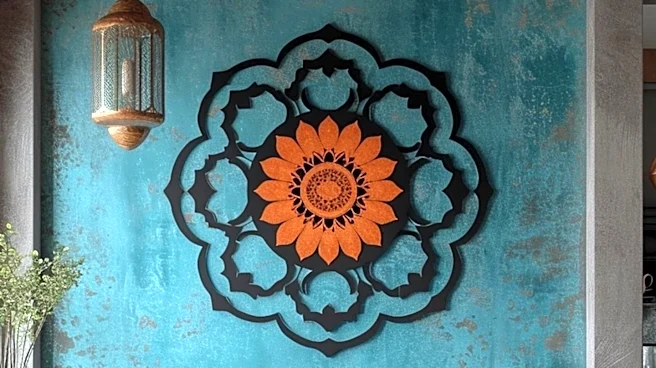
areas like breakfast nooks or entryways. A crucial step involves establishing a strong visual anchor with one large, commanding piece of art, placed either slightly off-center or in the middle of the planned grid, around which smaller and medium frames can be arranged. The integration of 3D objects, such as vintage copper molds, antique cutting boards, or brass sconces, is recommended to add depth and historical character. Additionally, the article highlights the necessity of tight spacing, suggesting gaps of two to three inches between frames and objects to create a cohesive mass rather than a scattered collection. Unifying diverse art styles through consistent framing materials or a restricted color palette for the artwork itself is also emphasized to maintain a sophisticated aesthetic.
Why It's Important?
The principles outlined for creating kitchen gallery walls are important for homeowners and interior designers seeking to enhance living spaces. By providing structured guidance on art placement, spacing, and thematic cohesion, the article helps individuals avoid common pitfalls that can lead to cluttered or unappealing displays. The emphasis on protecting valuable art from kitchen elements like grease and steam underscores practical considerations for preserving investments in home decor. Furthermore, the advice on integrating 3D objects and maintaining tight spacing contributes to a more professional and curated look, elevating the overall aesthetic of a kitchen. This approach can transform ordinary walls into focal points, adding personal expression and style to a home, which can positively impact property value and homeowner satisfaction. For businesses in the home decor and art industries, these insights can inform product development and marketing strategies, catering to consumer demand for sophisticated and well-designed interior solutions.
What's Next?
Homeowners and interior design enthusiasts can immediately apply these guidelines to their kitchen spaces. The next steps involve identifying suitable wall areas, selecting a large anchor piece, and then curating a collection of art and 3D objects that align with the recommended spacing and unifying elements. This might involve purchasing new art, frames, or decorative objects that fit a chosen color palette or framing style. Retailers specializing in home decor, art, and framing services may see an increased demand for products that facilitate these gallery wall designs, such as uniform frame sets, diverse art prints, and unique 3D wall decor. Design professionals might incorporate these techniques into their client consultations, offering specialized services for creating curated gallery walls. Educational content, workshops, and online tutorials focusing on these specific design principles could also emerge to further guide consumers in implementing these ideas effectively.
Beyond the Headlines
The concept of a gallery wall, particularly in a functional space like a kitchen, extends beyond mere decoration; it reflects a broader cultural trend towards personalization and curated living. In an era of mass-produced goods, the deliberate assembly of diverse art and objects speaks to a desire for individuality and storytelling within the home. The article's focus on unifying disparate elements through framing or color palettes touches upon the psychological need for order and harmony in visual environments, even amidst eclecticism. Ethically, the advice on protecting art from kitchen elements highlights a practical consideration for sustainability and preservation of resources. The emphasis on creating a 'single, massive art installation' rather than a 'random assortment' suggests a shift from casual accumulation to intentional design, influencing how individuals perceive and interact with their personal spaces. This trend could also foster a greater appreciation for art and craftsmanship, encouraging consumers to invest in quality pieces that contribute to a cohesive and meaningful home aesthetic.