





What's Happening?
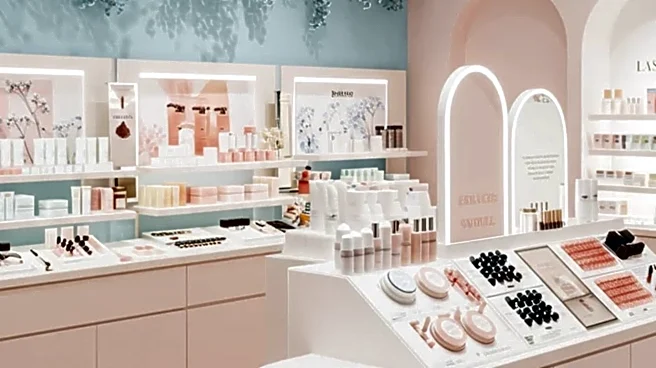
The premium cosmetics market, valued at $199.8 billion in 2026, is forecast to grow at a compound annual growth rate (CAGR) of 6.45% to reach $350.7 billion by 2035. This growth is driven by consumers' willingness to invest in high-end products, particularly
in fragrance and skincare. Key players like L'Oréal S.A., The Estée Lauder Companies Inc., LVMH Moët Hennessy Louis Vuitton SE, Chanel S.A., and Shiseido Co., Ltd. collectively held 35% of the market share in 2025. The market encompasses prestige and masstige beauty products sold through selective and premium mass channels, including skincare, color cosmetics, hair care, fragrance, and bath and body items. Asia Pacific is identified as the largest and fastest-growing region, with China's recovery and India's rising middle class contributing significantly to demand. Online sales are also a major growth driver, projected to reach $148.8 billion by 2035.
Why It's Important?
This projected growth signifies a continued shift in consumer spending towards premium beauty products, impacting U.S. retailers, manufacturers, and supply chains. U.S. tariffs on imported prestige goods, particularly from the European Union and Japan, are identified as a key restraint, potentially increasing costs for consumers and reducing profit margins for companies. The Modernization of Cosmetics Regulation Act (MoCRA) also introduces new compliance requirements for U.S. cosmetic brands, especially smaller independent and imported brands, which could raise operational costs. The market's reliance on fragrance and skincare innovation, coupled with the increasing influence of digital channels and younger buyers, means U.S. companies must adapt their marketing and product development strategies to remain competitive. The trend towards natural and organic formulations, as well as gender-neutral products, also presents opportunities and challenges for brands operating in the U.S. market.
What's Next?
The premium cosmetics market is expected to see continued innovation in fragrance and skincare, with brands focusing on concentrated formats, refillable packaging, and products with clinical claims. The growth of online sales channels will likely intensify, requiring U.S. brands to strengthen their e-commerce presence and digital marketing strategies. Regulatory changes under MoCRA, particularly regarding fragrance-allergen labeling, will necessitate adjustments in product formulation and labeling for brands selling in the U.S. market. Companies will also need to navigate the impact of tariffs on imported goods, potentially by localizing production or adjusting pricing strategies. The increasing demand from younger consumers and the growth of men's grooming and unisex product lines suggest that brands will continue to diversify their offerings to capture these evolving market segments.
Beyond the Headlines
The premium cosmetics market's trajectory highlights broader societal trends, including a growing emphasis on self-care, personal well-being, and conscious consumption. The demand for natural and organic products reflects increasing consumer awareness of ingredients and environmental impact, pushing U.S. brands towards more sustainable practices. The rise of gender-neutral products challenges traditional marketing approaches and reflects evolving perceptions of beauty and identity. The influence of social media on product discovery and purchasing decisions underscores the power of digital platforms in shaping consumer behavior. Furthermore, the regulatory landscape, particularly MoCRA, signifies a move towards greater transparency and safety in the U.S. cosmetics industry, potentially setting new standards for product development and consumer protection.