







What's Happening?
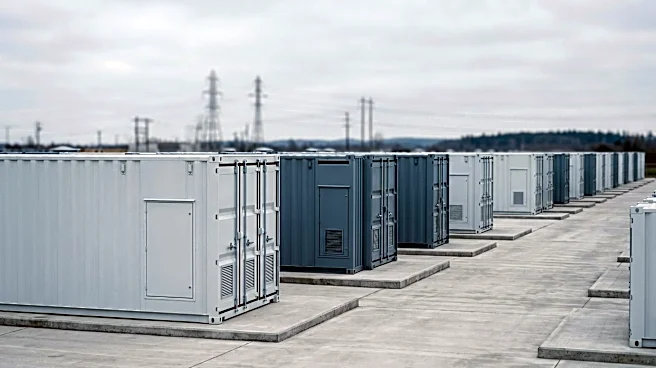
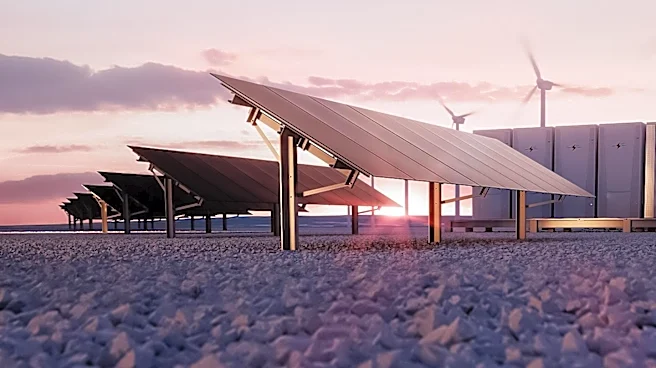
Black Hills Energy has announced plans to install 50 megawatts of battery storage in Pueblo, Colorado. This project aims to integrate more renewable energy into the state's power grid by allowing the company to capture excess wind energy when available
and store it for use during peak demand periods, such as hot summer evenings. The four-hour Tesla Megapack batteries will be situated adjacent to Black Hills Energy's 420-megawatt natural gas plant near the Pueblo Airport. The stored energy will primarily come from the company's three wind installations in southern Colorado, which have a combined capacity of 149 megawatts. This initiative is part of Black Hills Energy's commitment to reduce greenhouse gas emissions by 80% by 2030, in compliance with Colorado law.
Why It's Important?
This development is significant for Colorado's energy landscape and the broader U.S. transition to renewable energy. The addition of substantial battery storage capacity addresses a key challenge of renewable sources like wind power: intermittency. By storing excess wind energy, Black Hills Energy can provide a more reliable and consistent power supply, reducing reliance on fossil fuel-based generation during high-demand times. This project contributes to Colorado's ambitious greenhouse gas reduction targets and serves as a model for other utilities seeking to decarbonize their operations. The rapid expansion of battery storage in Colorado, from very small installations in 2018 to significant utility-scale projects today, demonstrates the increasing viability and importance of energy storage in modernizing the grid and achieving clean energy goals. It also highlights the growing role of technology providers like Tesla in the energy sector.
What's Next?
Black Hills Energy anticipates having the battery storage system operational by late 2027. The project involves collaboration with Linxon, a global engineering, procurement, and construction company, and Cloudbreak Energy, a national developer of distributed resources and utility-scale solar and storage projects. The successful implementation of this project will likely inform future energy storage initiatives across Colorado and potentially other states. The American Clean Power's upcoming Recharge conference in Colorado will provide a platform for industry leaders and policymakers to discuss further advancements and strategies in renewable energy and storage. Continued investment in such infrastructure will be crucial for meeting evolving energy demands while simultaneously reducing environmental impact.
Beyond the Headlines
The deployment of utility-scale battery storage, as exemplified by Black Hills Energy's project, signifies a deeper shift in energy infrastructure and policy. Beyond simply integrating renewables, these systems enhance grid resilience, allowing for better management of energy flow and potentially preventing outages. The strategic placement of batteries alongside existing natural gas plants suggests a transitional approach, where fossil fuel assets can be optimized while renewable integration increases. This move also has economic implications, potentially stabilizing energy prices by reducing reliance on peak-demand fossil fuel generation. Furthermore, the rapid growth of battery technology and its adoption by utilities could spur innovation in energy storage solutions, leading to more efficient and cost-effective systems. This trend reflects a broader societal commitment to sustainability and a recognition of the economic and environmental benefits of a diversified energy portfolio.