


What's Happening?
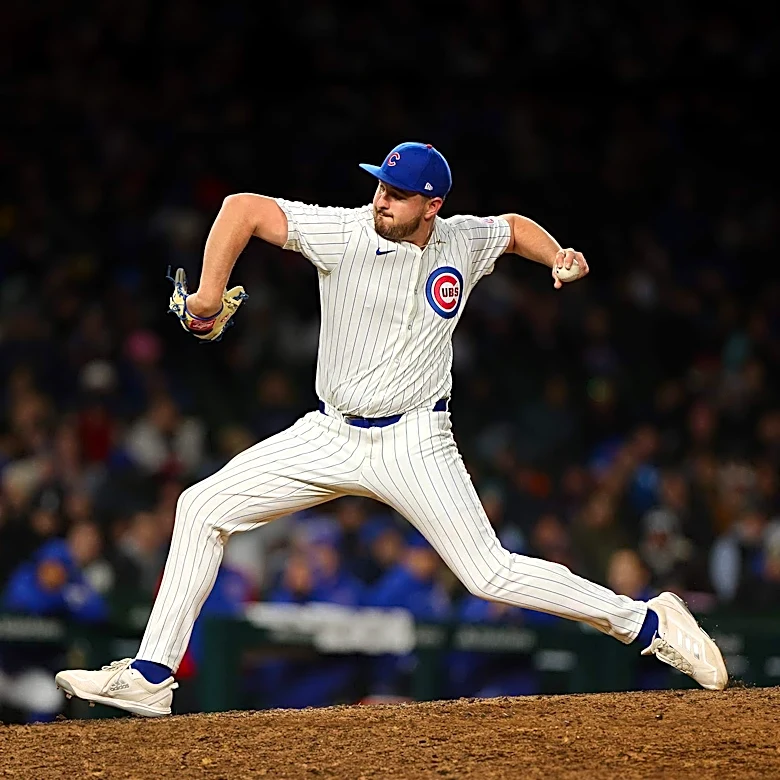
Pitcher Matthew Boyd has officially become a free agent after declining his $15 million mutual option with the Chicago Cubs. Instead, Boyd will accept a $2 million buyout, allowing him to explore opportunities with other Major League Baseball teams. While
he can begin discussions with other clubs next week, a short window remains for him to potentially return to Chicago. Boyd, who will turn 36 in February, has faced significant durability concerns throughout his career, including Tommy John surgery and a partial meniscus tear in his knee in 2026. Despite these challenges, he posted a 3.91 ERA over 126 2/3 innings in 2026. His strikeout rate, however, saw a decline, falling to 18.5% for the season and as low as 15.5% after his return from injury. Teams evaluating Boyd will need to assess whether this drop-off in performance was a lingering effect of his knee procedure or indicative of a more persistent issue with inducing weak contact.
Why It's Important?
Boyd's entry into free agency significantly impacts the Chicago Cubs, further thinning their pitching rotation as they head into the offseason. For the Cubs, this departure means they must now actively seek a replacement for a pitcher who, despite injury concerns, provided valuable innings. For Boyd, the decision to decline the option signals his belief that he can secure a more favorable contract on the open market, likely a one-year deal to re-establish his health and performance metrics. His availability will be of interest to clubs looking for a useful, innings-eating option to stabilize the back half of their rotation. The market for pitchers with durability questions, especially those approaching their mid-30s, often favors shorter-term contracts, making a multi-year guarantee less likely unless multiple teams highly value his recent track record of run prevention.
What's Next?
Matthew Boyd will now enter the open market, where he can begin negotiations with other MLB teams. While a return to the Chicago Cubs is still a possibility within a limited timeframe, it is expected that he will explore offers from various clubs. Given his age and injury history, a one-year contract is considered the most probable outcome, allowing him to demonstrate his health and effectiveness over a full season. Teams will be weighing his solid surface results from 2026 against his declining strikeout rate and past injury issues. For the Cubs, the immediate next step will be to identify and pursue other pitching options to bolster their rotation, which is now even thinner with Boyd's departure. The upcoming free agency period will be crucial for both Boyd and the Cubs in shaping their respective futures.
Beyond the Headlines
Boyd's situation highlights a recurring challenge in professional baseball: balancing a player's past performance and potential with ongoing health concerns and age. His decision to decline a guaranteed option for a buyout underscores the calculated risks players take in free agency, hoping to secure a better long-term or higher-value deal. For teams, evaluating such players involves a complex assessment of medical history, advanced analytics, and projected future performance. The market's response to Boyd will also reflect broader trends in how teams value veteran pitchers with durability questions, particularly in an era where pitching depth is increasingly critical. This scenario could influence future contract negotiations for other players facing similar career junctures, emphasizing the importance of both on-field results and perceived health in securing lucrative deals.