







What's Happening?
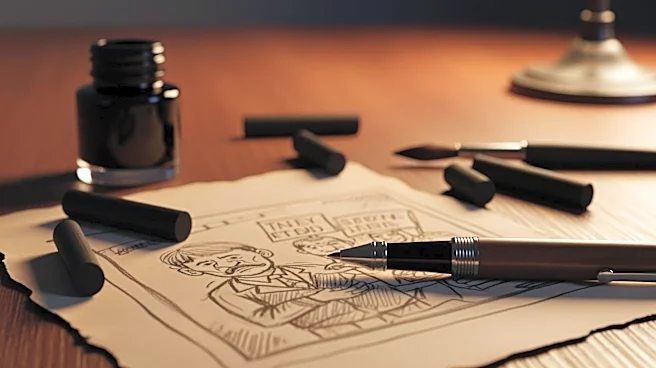
Derf Backderf's graphic novel 'The Dissidents: Autocrats! Vigilantes! Communists! and Cartoonists!' delves into the challenges faced by left-wing political cartoonists during World War I in America. The narrative follows fictional cartoonist Joe Hertle,
who joins The Masses, a progressive magazine, amidst President Woodrow Wilson's increasingly autocratic regime. The story highlights the American Protective League's actions against immigrants, particularly Germans, and the government's efforts to suppress dissent. Backderf integrates real-life cartoonists' art into the narrative, showcasing their fight for artistic and political freedom. The novel provides a detailed depiction of the era's political climate and the cartoonists' courageous stand against oppression.
Why It's Important?
The graphic novel sheds light on a historical period that resonates with contemporary issues of political dissent and freedom of expression. By documenting the struggles of cartoonists against government suppression, the novel underscores the importance of artistic and political freedom in a democratic society. The parallels drawn between the American Protective League's actions and modern-day immigration enforcement highlight ongoing challenges in protecting civil liberties. This narrative serves as a reminder of the vital role that artists and activists play in advocating for justice and resisting authoritarianism, making it relevant to current discussions on freedom and democracy.
What's Next?
The novel's exploration of historical events invites readers to reflect on the current state of political and artistic freedom in the U.S. It encourages discussions on the role of media and art in challenging government actions and advocating for change. As readers engage with the story, they may consider the implications for today's political climate and the importance of safeguarding freedom of expression. The novel's release could spark conversations about the need for vigilance in protecting civil liberties and the power of art as a tool for resistance.
Beyond the Headlines
Beyond its historical narrative, 'The Dissidents' offers insights into the cultural and ethical dimensions of political dissent. It highlights the courage required to stand against oppressive regimes and the impact of collective action in shaping societal change. The novel's portrayal of cartoonists as both artists and activists emphasizes the intersection of creativity and political engagement. This perspective encourages readers to consider the broader implications of artistic expression as a means of challenging power structures and advocating for social justice.