

What's Happening?
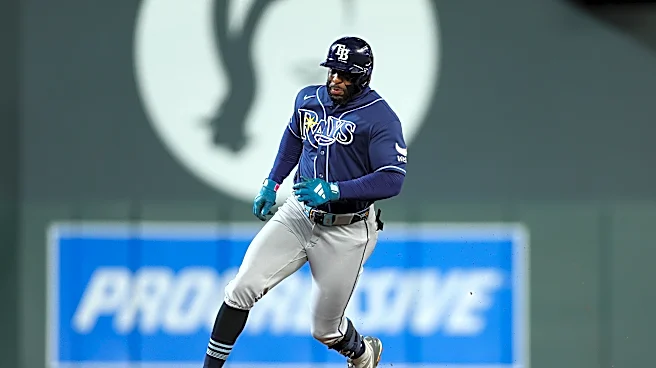
The Seattle Mariners' home ballpark, T-Mobile Park, may inadvertently contribute to outfielder Randy Arozarena securing a more lucrative free-agent contract elsewhere, according to Sports Illustrated. Arozarena, who hit 26 home runs in his walk year,
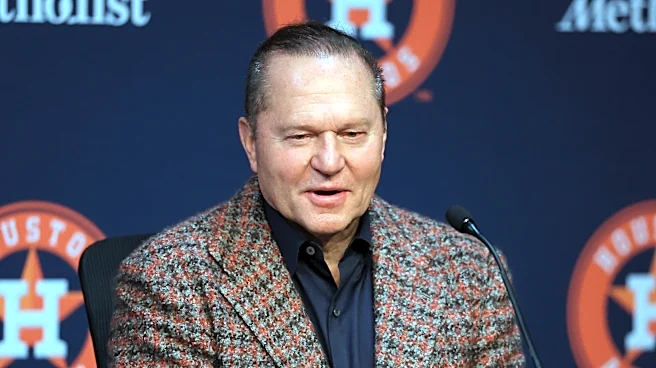
posted a .788 OPS at T-Mobile Park but a significantly higher .933 OPS on the road in 2026. This stark difference in performance, particularly his road split, is expected to be a key selling point for his agent, Scott Boras, to other teams with more hitter-friendly ballparks. The Mariners have already extended a $23.15 million qualifying offer to Arozarena, but he is widely expected to decline it. His camp is reportedly seeking a six-year deal worth over $150 million, a figure the Mariners are unlikely to match, especially for a left fielder entering his age-32 season. If Arozarena signs elsewhere for at least $50 million, the Mariners would receive a compensatory draft pick.
Why It's Important?
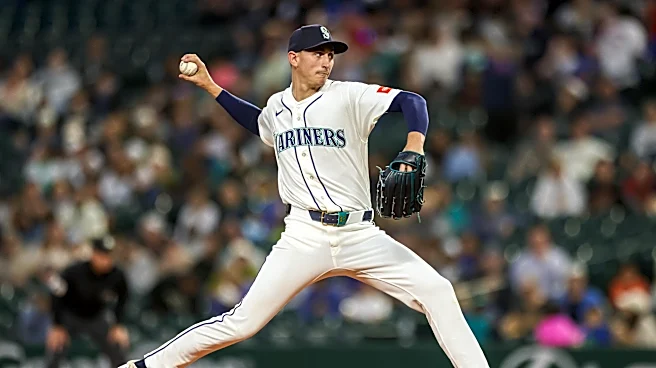
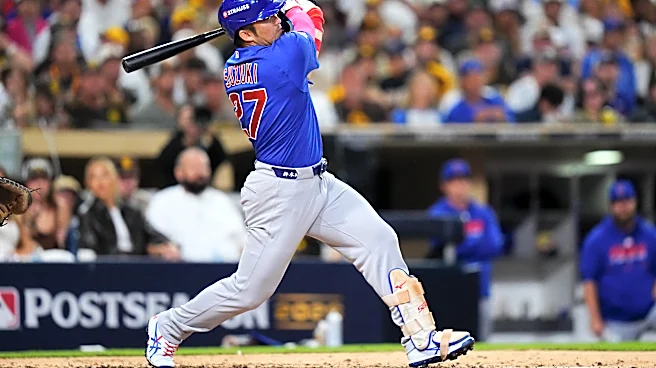
This situation underscores the significant impact of ballpark factors on player performance and market value in professional baseball. T-Mobile Park's reputation as a less hitter-friendly venue, particularly for overall offense and home runs, means Arozarena's impressive road statistics could be more appealing to teams with ballparks that would amplify his power. For the Mariners, Arozarena's expected departure highlights the challenge of retaining star players when their market value exceeds the team's financial comfort zone or strategic roster plans. The potential loss of Arozarena, a dangerous right-handed bat, necessitates the Mariners to seek replacements, with reported interest in players like Seiya Suzuki. This scenario also illustrates the strategic calculations involved in qualifying offers and compensatory draft picks, which can provide some consolation for losing a high-value free agent.
What's Next?
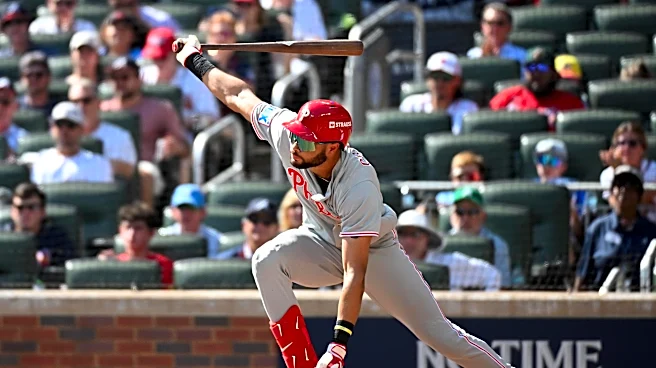
Randy Arozarena has until November 17 to decide on the Mariners' qualifying offer. It is widely anticipated that he will decline the offer and explore the free-agent market, seeking a long-term, high-value contract. Teams like the Philadelphia Phillies, with a more hitter-friendly ballpark, have reportedly shown interest in Arozarena and could be strong contenders for his services. The Mariners, in turn, will focus on finding a replacement for Arozarena's offensive production. Their reported interest in Seiya Suzuki, another right-handed bat, suggests they are actively planning for Arozarena's potential departure. The outcome of Arozarena's free agency will set a benchmark for other outfielders in the market and will significantly influence the Mariners' offseason roster construction.
Beyond the Headlines
The phenomenon of a player's home ballpark influencing their free-agent value is a nuanced aspect of baseball economics. It forces teams to consider not just a player's raw statistics, but how those statistics might translate to different environments. For players, it can mean strategically timing their free agency to coincide with a strong performance in a contract year, especially if their home park suppresses their numbers. For teams, it creates a complex decision-making process: do they pay a premium for a player whose numbers might be inflated by their home park, or do they pass on a player whose true value might be masked by a less favorable home environment? This situation also highlights the ongoing debate about the fairness and effectiveness of the qualifying offer system in MLB, which aims to compensate teams for losing star players but can also complicate a player's market.