


What's Happening?
The Hanoi office market is undergoing a significant transition towards a multipolar development phase, as reported by Savills Vietnam. In the first quarter of 2026, the total office space supply in Hanoi was recorded at 2.3 million square meters. By 2028,
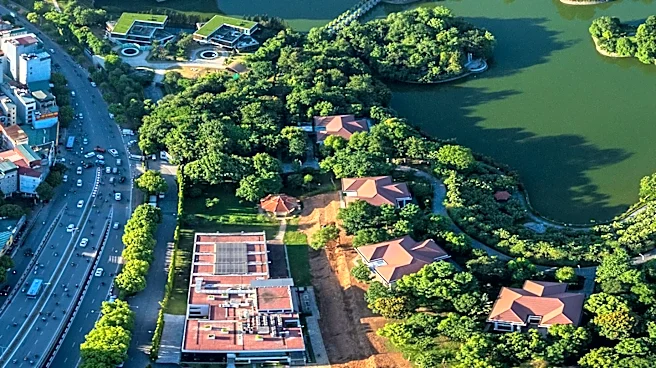
an additional 403,000 square meters of office space is expected, primarily in developing areas such as Tay Ho Tay, West, and Southeast Hanoi. These areas are favored due to their large land reserves and comprehensive planning. This shift reflects a move away from the traditional central business district (CBD) model, with new areas expanding the market rather than directly competing with the city center. Despite this expansion, the central areas of Hoan Kiem and Ba Dinh remain crucial for businesses prioritizing prestige and connectivity, as evidenced by the high occupancy rates of Grade A office spaces in these districts.
Why It's Important?
This development is significant as it highlights a shift in Hanoi's urban planning and business landscape. The scarcity of new Grade A office spaces in the central business district underscores the continued importance of these areas for businesses that value location and brand prestige. The multipolar development model offers businesses more options, potentially reducing costs and accommodating larger space requirements. However, the central area's limited supply and high demand suggest that it will remain a premium location, particularly for industries such as finance and consulting that benefit from proximity to regulatory agencies and established business ecosystems. This trend could influence real estate investment strategies and urban development policies in Hanoi.
What's Next?
As the market continues to evolve, businesses may need to reassess their location strategies, balancing the benefits of central locations with the cost advantages of emerging areas. Real estate developers might focus on creating high-quality office spaces in these new areas to attract businesses. Additionally, the government may need to consider infrastructure improvements in developing areas to support this growth. The ongoing scarcity in the central area could lead to increased competition for available spaces, potentially driving up rental prices and influencing future development projects.