








What's Happening?
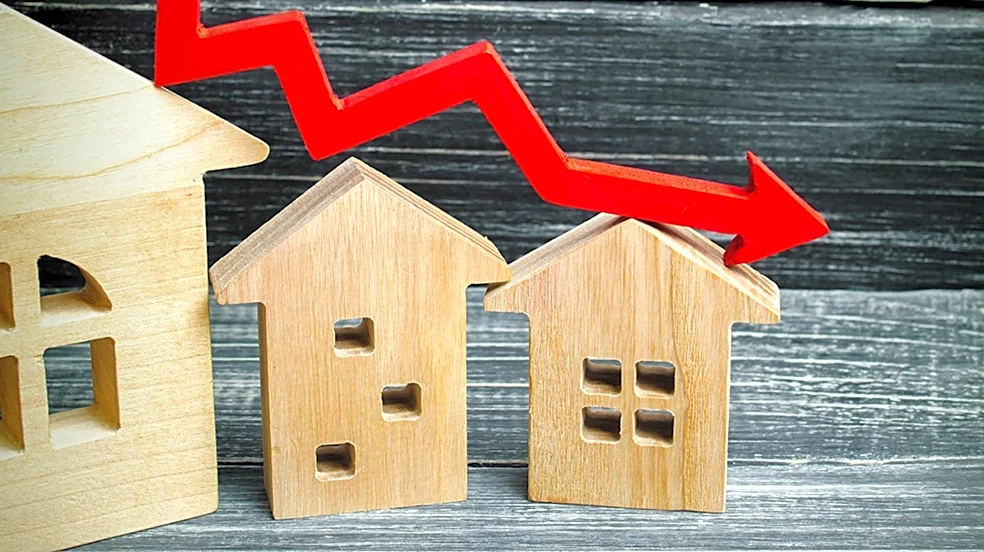
Pending home sales in the U.S. experienced a sharp decline in September, with the National Association of Realtors (NAR) reporting a more than 7% drop from August and over an 11% decrease compared to the previous year. This downturn is attributed to a significant
surge in mortgage rates, which rose from 6.8% to nearly 7.5% over the course of September, according to Mortgage Bankers Association data. All four U.S. regions observed monthly and annual declines, with the West experiencing the most substantial slowdown. NAR Chief Economist Lawrence Yun noted that market conditions weakened due to these rapidly rising mortgage rates. A pending sale indicates a signed contract but not yet a closed transaction, which typically finalizes within one to two months.
Why It's Important?
The sharp decline in pending home sales signals a continued cooling in the U.S. housing market, impacting both prospective buyers and sellers. High mortgage rates increase the cost of homeownership, making it less affordable for many and sidelining potential buyers. This trend contributes to transaction volumes remaining near 30-year lows for the fourth consecutive year, creating challenges for mortgage lenders, real estate agents, and other housing stakeholders. The sustained slowdown could lead to a prolonged sales drought, as most housing forecasts predict mortgage rates will remain elevated. This situation affects economic activity, as the housing sector is a significant contributor to the U.S. economy, influencing construction, retail, and financial services.
What's Next?
Housing stakeholders are looking to 2027 with trepidation, as forecasts suggest mortgage rates will remain at current levels, potentially prolonging the sales drought. Optimal Blue, a hedging and market intelligence firm, anticipates mortgage rates could climb to 7.8% over the next three months and 7.85% over the next year. NAR Chief Economist Lawrence Yun, however, offered a glimmer of optimism, suggesting that borrowing costs might be topping out, given that mortgage rates have already risen significantly beyond the Federal Reserve’s short-term interest rate hikes. Buyers and sellers may continue to hold back, waiting for more favorable mortgage rates before re-entering the market, indicating a period of continued uncertainty and reduced activity in the housing sector.
Beyond the Headlines
The current housing market conditions reflect a broader economic sensitivity to interest rate fluctuations and consumer confidence. The surge in mortgage rates, partly influenced by U.S. Treasury yields and global events like the Iran war, highlights the interconnectedness of geopolitical factors and domestic economic stability. The reluctance of buyers and sellers to engage in transactions due to high rates can lead to a stagnation in housing inventory and a decrease in market liquidity. This situation also raises questions about housing affordability and wealth accumulation for younger generations, as homeownership becomes increasingly challenging. The long-term implications could include shifts in demographic patterns, urban development, and the overall economic landscape as individuals adapt to changing housing market realities.