





What's Happening?
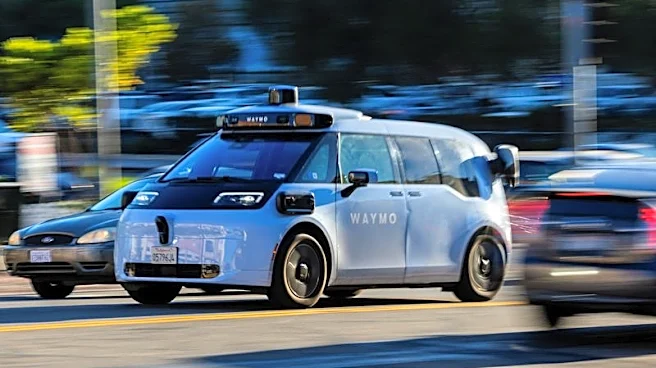
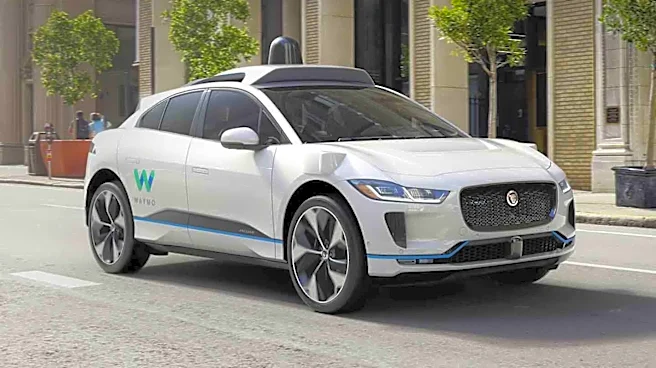
Waymo has paused all fully driverless freeway operations across its U.S. markets. This decision came after California regulators prohibited Waymo vehicles from operating on state freeways, citing an 'imminent hazard' due to multiple incidents where vehicles entered
active construction zones. In response, Waymo filed two safety recalls with the National Highway Traffic Safety Administration (NHTSA). These recalls aim to improve navigation around closed freeway lanes and intersections with manual traffic control, such as those directed by a police officer. The company opted for a company-wide pause rather than limiting the restriction to California, indicating the seriousness with which it views the issue. While freeway operations are suspended, Waymo's robotaxis continue to operate normally on surface streets in its service areas. Detroit, for instance, is unaffected by the pause as Waymo had not yet initiated driverless freeway operations in that market.
Why It's Important?
This nationwide pause by Waymo underscores the significant regulatory scrutiny and operational challenges facing the autonomous vehicle industry. The 'imminent hazard' declaration by California regulators highlights the critical safety standards expected of self-driving technology, particularly in complex environments like construction zones. For Waymo, a leader in autonomous ride-hailing, this setback could impact public trust and slow the broader adoption of driverless technology. The company's proactive, nationwide pause, rather than a state-specific one, suggests an acknowledgment of a systemic issue that requires a comprehensive solution. This event will likely influence how other states and federal regulators approach the oversight of autonomous vehicle deployment, potentially leading to more stringent testing and validation requirements across the industry. The incident also emphasizes the ongoing difficulty for autonomous systems to interpret dynamic and unpredictable real-world scenarios, such as shifting lane markings and human traffic direction.
What's Next?
Waymo's immediate next steps involve addressing the issues identified in its two NHTSA safety recalls. These recalls are expected to result in software updates designed to enhance the vehicles' ability to navigate closed freeway lanes and intersections with manual traffic control. Following the implementation of these fixes, Waymo will likely undergo retesting and seek regulatory approval to resume freeway operations. The timeline for this resumption is currently unconfirmed, and it is anticipated that regulators, particularly in California, will closely scrutinize the effectiveness of the proposed solutions. The company's response and the subsequent regulatory re-evaluation will set a precedent for how similar safety concerns are handled within the autonomous vehicle sector. Stakeholders, including riders and investors, will be watching for updates on when and how Waymo plans to reintroduce its driverless freeway service, which could occur in a phased manner rather than a single nationwide restart.
Beyond the Headlines
This incident brings to light the inherent complexities and ethical considerations in developing and deploying autonomous driving systems. The challenge of programming vehicles to accurately perceive and react to unpredictable human behaviors and temporary environmental changes, such as those in construction zones, remains a significant hurdle. The reliance on software-driven fixes for what are termed 'recalls' highlights a paradigm shift in automotive safety, where updates are delivered digitally rather than through physical component replacements. This also raises questions about the transparency of autonomous vehicle incident reporting and the data regulators use to determine 'imminent hazards.' The long-term implications could include a re-evaluation of testing methodologies for autonomous vehicles, potentially leading to more rigorous simulation and real-world scenario testing, especially for edge cases involving human interaction and dynamic road conditions. This event could also spur further public debate on the balance between technological innovation and public safety in the rapidly evolving autonomous mobility landscape.