





What's Happening?
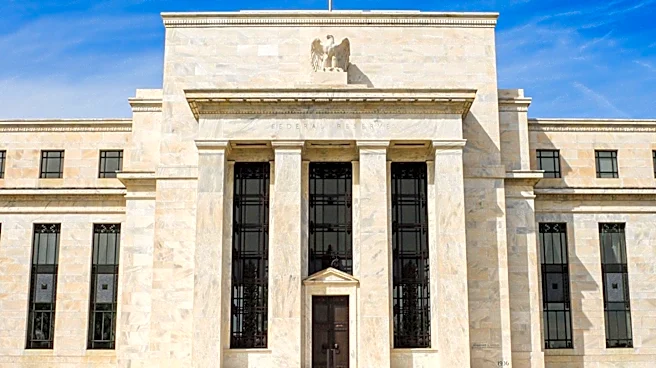
The Federal Reserve Board has announced an enforcement action against American Express Company. This action addresses the firm's failure to adequately detect and report suspicious activities related to money laundering. The Board identified significant
deficiencies in the implementation of American Express Company's enterprise-wide anti-money laundering program, particularly within its subsidiary national bank. The Office of the Comptroller of the Currency (OCC), which serves as the primary federal regulator for the firm's national bank, has also issued a separate enforcement action against the bank. The Federal Reserve's action aims to ensure that American Express Company operates in full compliance with all U.S. laws and regulations.
Why It's Important?
This enforcement action by the Federal Reserve Board against a major financial institution like American Express underscores the critical importance of robust anti-money laundering (AML) programs within the U.S. financial system. Failures in detecting and reporting suspicious activities can have far-reaching consequences, potentially enabling illicit financial flows, funding criminal enterprises, and undermining national security. For American Express, this action signifies a need for significant operational and compliance overhauls, which could entail substantial financial and reputational costs. For the broader financial industry, it serves as a strong reminder of regulatory scrutiny and the severe penalties for non-compliance, potentially leading other institutions to review and strengthen their own AML frameworks to avoid similar enforcement actions. This also highlights the coordinated effort between federal regulators like the Federal Reserve and the OCC in maintaining the integrity of the financial system.
What's Next?
Following the Federal Reserve Board's enforcement action, American Express Company will be required to address the identified deficiencies in its anti-money laundering program. This will likely involve a comprehensive review and overhaul of its internal controls, reporting mechanisms, and employee training related to AML compliance. The company will need to demonstrate to both the Federal Reserve and the Office of the Comptroller of the Currency that it has implemented effective measures to prevent future failures in detecting and reporting suspicious activities. The specific terms of the enforcement action, which are detailed in an attachment, will dictate the timeline and requirements for these corrective actions. Non-compliance could lead to further penalties or restrictions on the company's operations. Other financial institutions may also face increased scrutiny from regulators regarding their own AML programs in light of this action.
Beyond the Headlines
The enforcement action against American Express extends beyond immediate compliance issues, touching upon the broader ethical and societal responsibilities of financial institutions. Money laundering facilitates a range of illegal activities, from drug trafficking and terrorism financing to fraud and corruption, making effective AML programs a cornerstone of national security and public safety. This case highlights the complex challenge of balancing financial innovation and customer convenience with stringent regulatory requirements designed to combat financial crime. The reputational damage from such an action can be significant, impacting customer trust and investor confidence. Furthermore, it emphasizes the continuous evolution of regulatory expectations and the need for financial institutions to proactively adapt their systems and processes to counter increasingly sophisticated money laundering techniques. The coordinated action by multiple federal regulators also signals a unified and determined approach to upholding financial integrity.