





What's Happening?
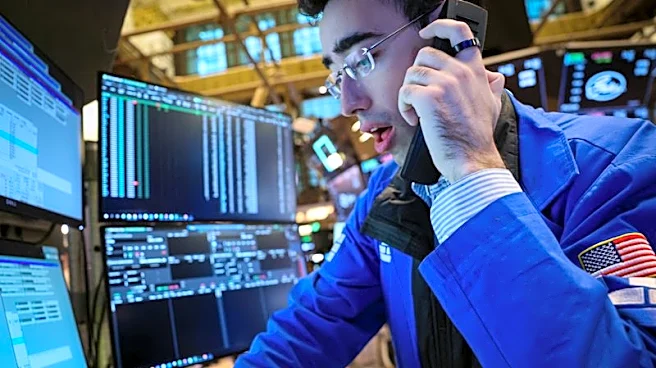
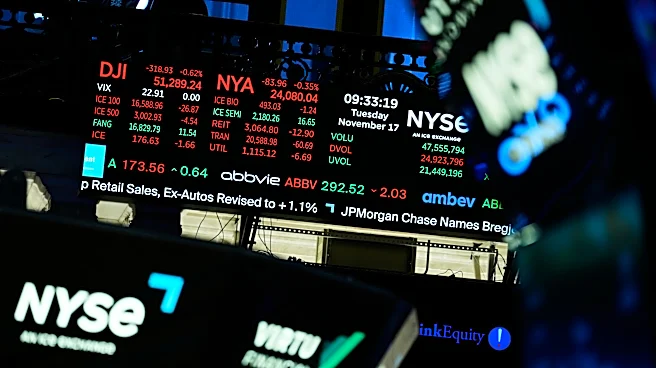
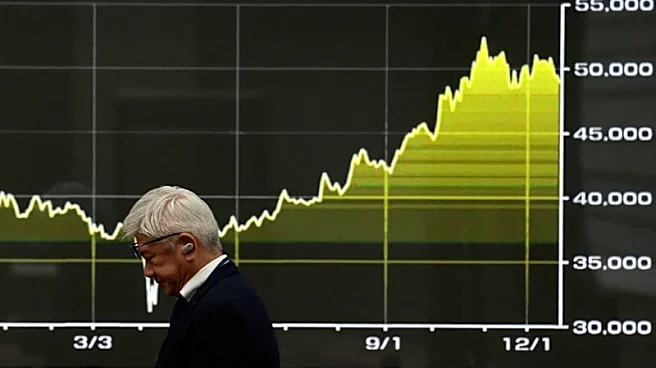
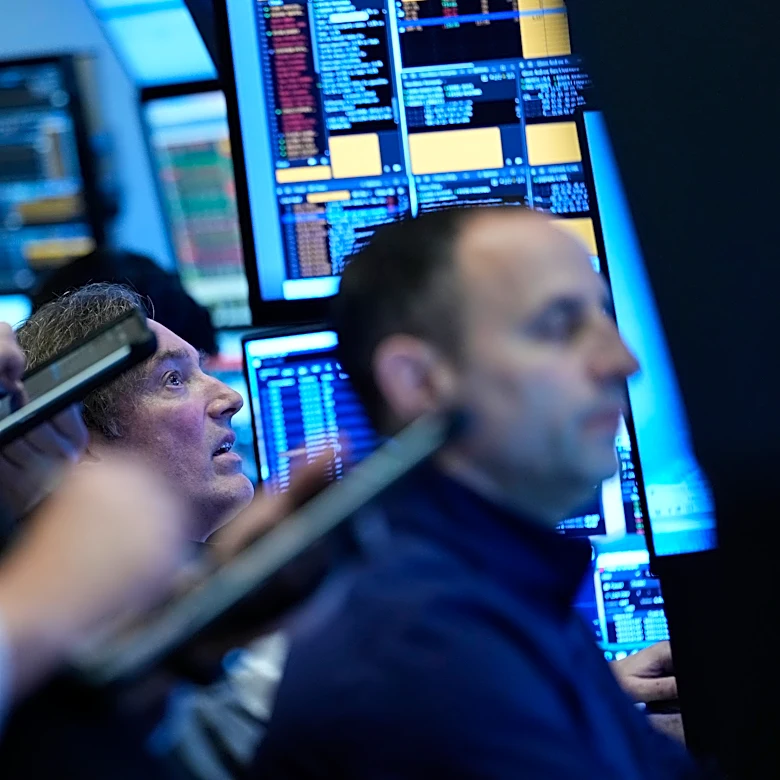
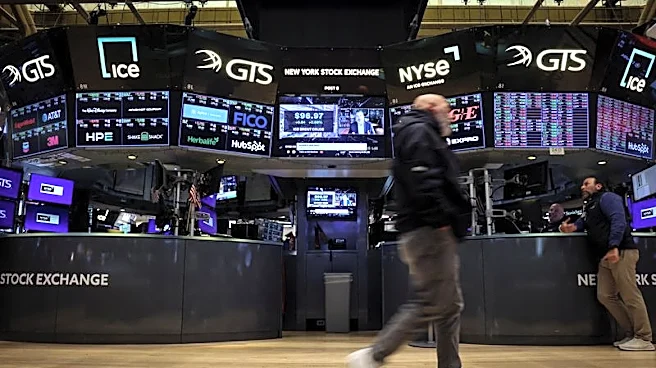
The Dow Jones Industrial Average (DJIA) closed below the 50,000 level for the first time since June, experiencing a more than 2% decline on Thursday. This drop contributed to a significant downturn across major U.S. averages, with the Dow falling 6.2%
for the week, marking its worst weekly performance since April 2025. The S&P 500 and Nasdaq also saw substantial losses, each down 5% for the week, representing their largest one-week pullbacks in over a year. The market's decline was partly influenced by a short-seller report concerning Advanced Micro Devices (AMD) and a disappointing public market debut for Anthropic, an AI company, whose shares dropped 6% in premarket trading on Friday. Despite an initial strong start to Thursday's session, with the Nasdaq Composite up 2.1% and the S&P 500 up 1.3%, stocks tumbled shortly after Anthropic began trading, exacerbating existing weekly losses.
Why It's Important?
This significant market downturn signals a period of increased investor caution and risk-off sentiment within the U.S. financial markets. The Dow's fall below a key psychological threshold like 50,000 can trigger further selling pressure as it may be perceived as a loss of confidence. The broad-based decline across the Dow, S&P 500, and Nasdaq indicates that the market weakness is not confined to a single sector but is affecting a wide range of industries. This could impact retirement accounts, investment portfolios, and overall consumer wealth, potentially leading to reduced consumer spending. The underperformance of a highly anticipated AI company like Anthropic also suggests a potential cooling of investor enthusiasm for the artificial intelligence sector, which has been a significant driver of market gains. Deutsche Bank strategist Binky Chadha, however, suggests the market is 'very oversold,' implying a potential for a rebound if underlying growth and earnings remain strong.
What's Next?
Traders will closely monitor upcoming economic data, including the final reading of the University of Michigan's consumer sentiment report, which is expected on Friday. This report could provide insights into consumer confidence and spending intentions, influencing market sentiment. Additionally, corporate earnings reports, such as BJ's Wholesale before the market open, will be scrutinized for signs of corporate health and future outlooks. The market's reaction to these data points and earnings will determine whether the current downward trend continues or if a rebound is imminent. Investors will also be watching for any further developments regarding short-seller reports or other catalysts that could impact specific sectors or the broader market. The sentiment around the AI sector, particularly after Anthropic's debut, will also be a key area of focus for future investment trends.
Beyond the Headlines
The current market volatility highlights the delicate balance between investor sentiment and underlying economic fundamentals. While Deutsche Bank suggests the market is 'oversold' due to strong growth and earnings, the rapid decline indicates that negative catalysts, such as short-seller reports and disappointing IPOs, can quickly shift market psychology. This situation underscores the interconnectedness of various market factors, where a single event in one sector, like AI, can have ripple effects across the broader market. It also brings into focus the potential for market corrections even during periods of perceived economic strength, reminding investors of the inherent risks in equity markets. The rotation out of tech stocks, as noted by Chadha, suggests a re-evaluation of growth versus value investments, potentially signaling a broader shift in investment strategies among institutional and retail investors.