






What's Happening?
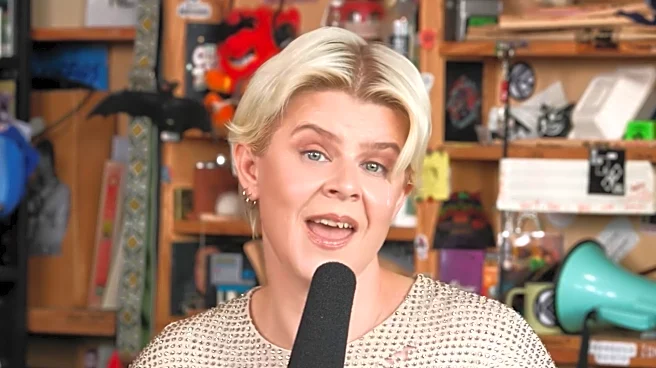
Swedish pop icon Robyn recently expressed strong disapproval of the Eurovision Song Contest during an appearance on Amy Poehler's podcast, 'Good Hang with Amy Poehler.' Robyn described the current state of Eurovision as 'just shit' and 'embarrassing,'
stating that she largely stopped watching the event after the legendary group ABBA's era. She recounted an experience watching it with American friends, one of whom covered his eyes due to embarrassment. Robyn further elaborated that after watching, she felt 'overstimulated, and in a bad way,' concluding that she does not like it. Sweden has a rich history with Eurovision, having won seven times, with ABBA securing the country's first victory in 1974 with 'Waterloo.' Other notable Swedish winners include Carola in 1991 and Loreen, who won twice.
Why It's Important?
Robyn's candid remarks on a widely listened-to podcast like 'Good Hang with Amy Poehler' could influence public perception of Eurovision, particularly among American audiences and younger demographics who follow pop culture figures. Her comments highlight a generational and artistic shift in how the contest is viewed, moving from a celebrated cultural event, especially in Sweden with acts like ABBA, to something she now finds cringeworthy. This perspective from a respected international artist could spark discussions about the contest's evolution, its current artistic merit, and its appeal to a global audience. For Eurovision organizers, such high-profile criticism might prompt reflection on how to maintain relevance and quality in an ever-changing music landscape, especially as they aim to attract diverse viewership.
What's Next?
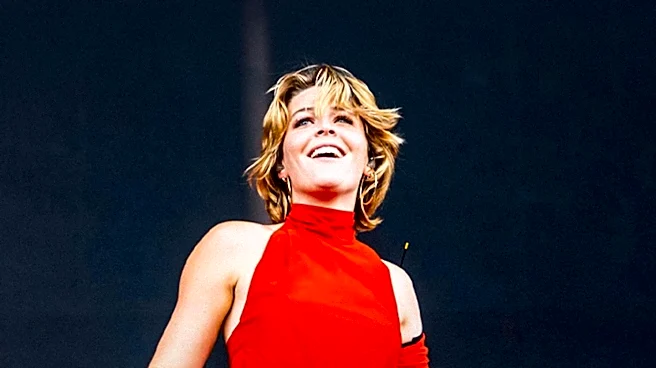
Robyn is scheduled to perform at Coachella 2027, and the Eurovision Song Contest's first semi-final is set to begin the following month in Burgas, Bulgaria. Her comments may generate further discussion and debate leading up to these events, potentially influencing public discourse around both her performances and the upcoming Eurovision contest. It remains to be seen if her remarks will lead to any official responses from Eurovision organizers or if other artists will weigh in on her perspective. The podcast's reach, available on platforms like Apple Podcasts and Spotify, ensures her opinion will continue to circulate among a broad audience, potentially shaping future viewership and critical reception of Eurovision.
Beyond the Headlines
Robyn's critique extends beyond a simple dislike of a music contest; it touches upon the broader cultural impact and legacy of iconic musical acts like ABBA. Her statement, 'We don't have ABBA anymore,' suggests a longing for a past golden era of Swedish music and performance on the international stage. This sentiment reflects a common challenge for long-running cultural institutions like Eurovision: how to evolve and remain contemporary while honoring their history and maintaining artistic integrity. The 'embarrassment' she describes could also be interpreted as a commentary on the perceived decline in quality or authenticity in modern pop culture, contrasting it with the enduring appeal of past legends. This raises questions about the balance between entertainment value and artistic substance in large-scale televised events.