





What's Happening?
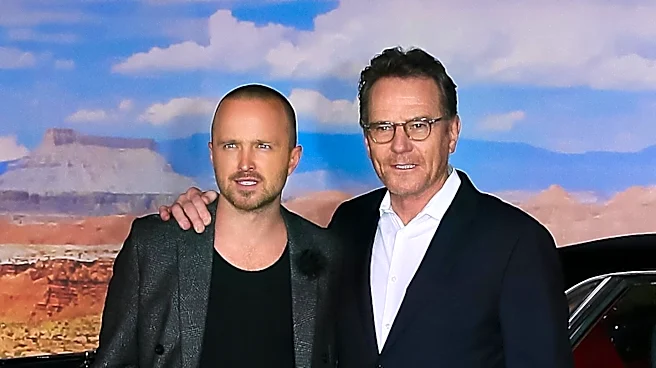
Bryan Cranston, who portrayed Walter White in the acclaimed series 'Breaking Bad,' has expressed immense pride after the show was ranked as the No. 1 TV series of the 21st century by The New York Times. The list, compiled from votes by 516 television
industry professionals including actors, writers, and showrunners, placed 'Breaking Bad' at the top among shows that premiered on or after January 1, 2000. Cranston, attending ArtPrize in Grand Rapids, Michigan, emphasized that this honor was bestowed upon the collective cast and crew by external voters, not something they chose for themselves. The series, which ran for five seasons from 2008 to 2013, also featured Bob Odenkirk, Anna Gunn, and Aaron Paul, and garnered numerous awards including 16 Emmys.
Why It's Important?
This recognition of 'Breaking Bad' as the top TV show of the 21st century by a prestigious publication like The New York Times, based on industry professional votes, significantly solidifies its legacy and influence within the entertainment landscape. For the television industry, it sets a high benchmark for storytelling, character development, and production quality. This kind of critical acclaim can influence future show development, encouraging creators to pursue complex narratives and morally ambiguous characters. For streaming platforms, the continued relevance and high regard for 'Breaking Bad' ensure its enduring appeal, driving viewership and potentially inspiring new subscribers. It also highlights the lasting impact of well-crafted television on popular culture and critical discourse, reinforcing the idea that TV can be as artistically significant as film.
What's Next?
The continued high regard for 'Breaking Bad' will likely sustain its presence on streaming platforms, attracting new viewers and re-engaging existing fans. This renewed attention could lead to increased interest in its spin-off, 'Better Call Saul,' and the film 'El Camino,' further extending the franchise's reach. For Bryan Cranston and other cast members like Bob Odenkirk, this milestone reinforces their association with a critically acclaimed project, potentially opening doors for new high-profile roles. The ranking might also spark discussions and debates among critics and audiences about the criteria for 'greatness' in television, influencing future lists and analyses of TV history. The show's enduring legacy will continue to be a subject of academic study and fan appreciation.
Beyond the Headlines
The recognition of 'Breaking Bad' as a pinnacle of 21st-century television extends beyond mere accolades; it reflects a cultural shift in how serialized dramas are consumed and valued. The show's exploration of morality, transformation, and the consequences of choices resonated deeply with audiences, pushing the boundaries of what television could achieve. Its complex narrative structure and character arcs have influenced a generation of showrunners and writers, contributing to the 'golden age' of television. Ethically, the series sparked conversations about the nature of good and evil, and the corrupting influence of power. Culturally, 'Breaking Bad' has become a touchstone, frequently referenced in discussions about television excellence and character study, cementing its place not just as a popular show, but as a significant piece of modern storytelling.