







What's Happening?
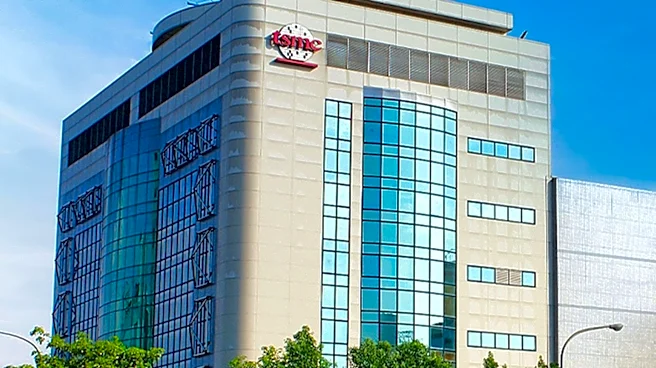
Taiwan Semiconductor Manufacturing Company (TSMC) is reportedly considering substantial price increases for its advanced packaging technology. This move is driven by tight packaging capacity and heavy demand from clients in the artificial intelligence
(AI) and server processor sectors. Goldman Sachs has noted that semiconductor stocks are now a primary driver of market movements, surpassing even oil prices, which underscores the significant impact of the AI trade on global markets. Despite some recent sell-offs in South Korean stocks, Goldman Sachs maintains a bullish outlook on equities, anticipating that strong earnings and lower valuations will continue to support stock performance through the end of the year. This potential price adjustment by TSMC reflects its strong pricing power and strategic efforts to protect its profit margins in a highly competitive and in-demand market.
Why It's Important?
TSMC's potential price increases for advanced packaging are highly significant for the U.S. technology sector and broader economy. As a leading global semiconductor foundry, TSMC's pricing decisions directly impact major U.S. tech giants like Apple, Nvidia, and Intel, which rely on its advanced manufacturing capabilities for their chips. Higher costs for advanced packaging could translate into increased production expenses for these companies, potentially affecting their profit margins or leading to higher prices for end-products, including AI hardware and consumer electronics. This development highlights the critical role of TSMC in the global supply chain, particularly for high-performance computing and AI applications. The tight packaging capacity also underscores a potential bottleneck in the rapid expansion of AI infrastructure, which could influence investment strategies and technological development timelines for U.S. firms. The bullish outlook from Goldman Sachs on equities, despite market fluctuations, suggests that the underlying demand for semiconductors, especially those powering AI, remains robust, indicating continued growth potential for the sector.
What's Next?
The semiconductor industry will closely monitor TSMC's final decisions regarding price adjustments for its advanced packaging services. U.S. technology companies, particularly those heavily invested in AI and server processors, will need to assess the impact of these potential price hikes on their cost structures and supply chain strategies. This could lead to renegotiations of existing contracts or a search for alternative packaging solutions, though TSMC's dominant position in advanced packaging limits immediate alternatives. The ongoing high demand for AI and server processors suggests that TSMC's pricing power will likely remain strong in the near term. Furthermore, the broader market will watch for any ripple effects on semiconductor stock valuations and overall market sentiment, as the AI trade continues to be a significant economic driver. Companies may also explore investments in domestic packaging capabilities or diversification of their supplier base to mitigate future supply chain risks.
Beyond the Headlines
The potential price increases by TSMC reveal deeper implications regarding the concentration of critical manufacturing capabilities within the global technology ecosystem. The reliance of U.S. tech giants on a single foreign entity for advanced semiconductor packaging highlights vulnerabilities in the supply chain, especially in an era of increasing geopolitical tensions. This situation could accelerate efforts by the U.S. government and private sector to bolster domestic semiconductor manufacturing and packaging capabilities, as seen with initiatives like the CHIPS Act. The ethical dimension arises from the potential for a single company to exert significant control over the pricing and availability of essential components for transformative technologies like AI. This could lead to debates about fair pricing, market dominance, and national security interests. Long-term shifts could include greater investment in R&D for alternative packaging technologies and a more diversified global manufacturing footprint to enhance resilience and reduce dependency on any single region or company.