





What's Happening?
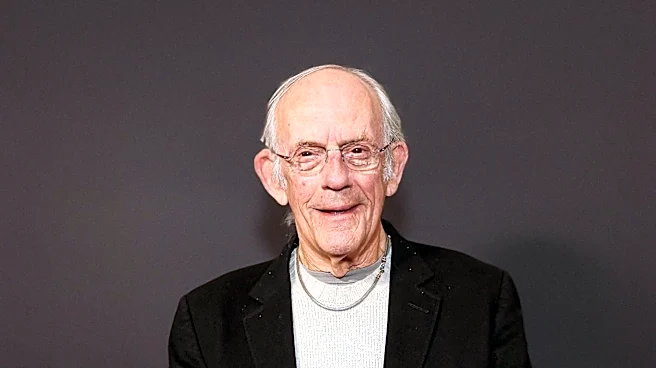
Actor Christopher Lloyd, widely recognized for his role as Doc Brown in 'Back to the Future,' has shared details about his affluent upbringing in his new memoir, 'In My Own Time.' Born in 1938 during the Great Depression, Lloyd's family was insulated
from the economic hardship due to his maternal grandfather, Lewis Henry Lapham, being a co-founder of Texaco in 1902. Lloyd recounted to The Wall Street Journal his childhood wonder at their 'Gilded Age' mansion. By 1944, his family resided on a 161-hectare estate named Waveny in New Canaan, Connecticut, with grounds designed by the descendants of Central Park's landscaper. This environment fostered his mother's gatherings of cultural elites, which Lloyd found fascinating and inspiring for his artistic inclinations. This luxurious lifestyle shifted when Lloyd was sent to boarding school at age 12, preceding his parents' separation. The family later donated the Waveny estate to the municipality of New Canaan, transforming it into a public recreational space, a decision Lloyd appreciates, feeling it remains his home.
Why It's Important?
Christopher Lloyd's memoir offers a unique glimpse into the rarely discussed private life of a celebrated American actor, revealing the formative experiences that shaped his artistic journey. His background, rooted in significant American industrial wealth through Texaco, highlights a segment of American history where vast fortunes influenced cultural and social landscapes. The transformation of his childhood estate into a public park also underscores a philanthropic trend among wealthy families to contribute private properties for community benefit, creating lasting public resources. For fans and biographers, these revelations provide a deeper understanding of Lloyd's personal narrative, potentially influencing interpretations of his iconic roles and career choices. The memoir contributes to the broader cultural discourse on the impact of inherited wealth and privilege on individual development and societal contributions.
What's Next?
With the release of 'In My Own Time,' Christopher Lloyd's memoir is expected to generate further interest in his life and career. Readers and critics will likely delve into the connections between his privileged upbringing and his artistic development, potentially leading to new analyses of his acting roles and public persona. The memoir's insights into his family's history and the donation of the Waveny estate may also spark renewed local interest in the public park, potentially increasing visitors or prompting historical preservation efforts. Lloyd may engage in promotional events, interviews, or book signings, offering more personal anecdotes and reflections on his past. The book's content could also inspire documentaries or biographical works exploring the intersection of his personal history with broader American social and economic trends.
Beyond the Headlines
The narrative of Christopher Lloyd's childhood extends beyond a personal story, touching upon themes of American aristocracy, industrial legacy, and the evolution of wealth in the 20th century. His family's connection to Texaco, a major player in the early oil industry, symbolizes the era of burgeoning American capitalism and its profound impact on national development and individual fortunes. The eventual donation of the Waveny estate to the public reflects a complex interplay of private wealth, public good, and changing societal values regarding land ownership and access. This act transforms a symbol of private opulence into a shared community asset, raising questions about the responsibilities of inherited wealth and its potential for broader societal benefit. Lloyd's journey from a gilded childhood to a celebrated acting career also highlights the diverse paths individuals from privileged backgrounds can take, often diverging from traditional expectations associated with their family's economic standing.