






What's Happening?
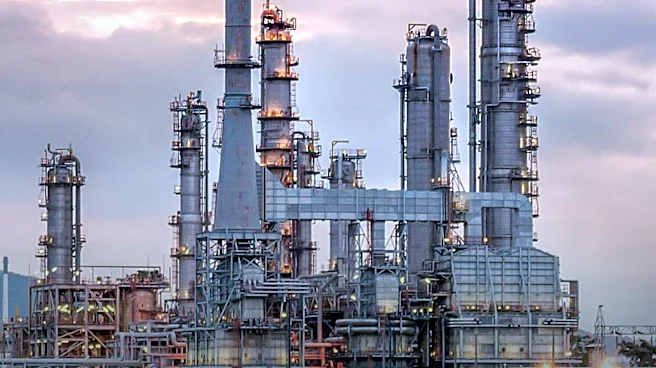
Air Liquide is making a significant investment of over $200 million to expand its industrial operations in Texas. The company is constructing a next-generation Partial Oxidation (POX) unit at Oxea's Bay City facility. This new unit is designed to meet
the increasing demand for chemical manufacturing by providing large-scale supplies of syngas and low-carbon hydrogen. The facility, expected to be operational by early 2029, will support Oxea's growing oxo-alcohols and performance chemicals businesses. Air Liquide's investment strengthens its partnership with Oxea and enhances its role in supplying essential industrial gases and technologies across the U.S. The new facility will incorporate an innovative carbon dioxide recycling system, which will capture and recirculate CO₂ back into Oxea's production process, optimizing syngas output and reducing net CO₂ emissions by approximately 64,000 tonnes annually.
Why It's Important?
This investment by Air Liquide is crucial as it aligns industrial growth with environmental sustainability. By integrating carbon recycling technology, the project not only boosts production capacity but also significantly cuts emissions, supporting climate objectives. The expansion is part of Air Liquide's broader strategy to enhance its pipeline network and industrial capabilities in the U.S. Gulf Coast, providing more reliable and competitive low-carbon solutions. This move positions Air Liquide as a key player in the transition towards sustainable chemical manufacturing, potentially influencing other companies to adopt similar environmentally friendly practices. The project also underscores the growing demand for low-carbon industrial solutions, which could drive further innovation and investment in the sector.
What's Next?
As the project progresses towards its 2029 operational target, Air Liquide will likely focus on the construction and integration of the new POX unit and its carbon recycling system. The company may also engage with other industrial partners to expand its network and capabilities further. Stakeholders, including environmental groups and industry leaders, will be watching closely to assess the project's impact on emissions and industrial efficiency. The success of this initiative could lead to more widespread adoption of similar technologies across the industry, potentially influencing regulatory policies and setting new standards for sustainable manufacturing practices.