





What's Happening?
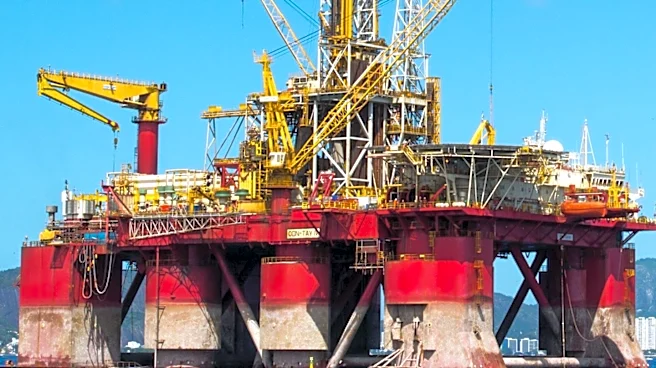
Shell is expanding its Canadian oil portfolio by acquiring a 30% non-operating interest in Equinor’s Bay du Nord offshore development. This project is located approximately 500 kilometers offshore Newfoundland and Labrador in Canada’s Flemish Pass basin.
Equinor will maintain a 70% ownership and continue as the operator. The financial terms of the agreement were not disclosed. The Bay du Nord development is a significant investment in Canada’s offshore oil industry, with estimated capital requirements of around C$14 billion. The initial phase is projected to contain over 400 million barrels of estimated recoverable oil resources, with a planned production capacity of 160,000 to 175,000 barrels of oil equivalent per day. First production is anticipated in 2031, pending project approval and investment decisions, which are targeted for early 2027.
Why It's Important?
This acquisition signifies Shell's continued interest in developing long-life oil resources within politically stable jurisdictions, aligning with a broader trend among major energy companies. For Shell, this investment provides access to an established resource base without the operational responsibilities, and the expected returns reportedly exceed its investment hurdle rate. For Equinor, bringing in Shell as a major partner helps to distribute financial exposure and development risk while allowing it to retain operational control. The Bay du Nord project, if approved, represents a substantial contribution to Canada's offshore oil sector and could bolster global energy supply security. This partnership highlights the ongoing strategic importance of large, long-duration resource projects in the global energy landscape, even as the industry navigates energy transition pressures.
What's Next?
The partnership between Shell and Equinor will continue with engineering and project planning as they evaluate the commercial viability of the Bay du Nord development. A final investment decision is targeted for early 2027, which will be a critical step towards the project's realization. If approved, first production is anticipated in 2031. The development is designed with subsea production facilities connected to a floating production, storage, and offloading vessel, with potential for future expansion to incorporate additional discoveries in the Flemish Pass basin. Regulatory approvals and the ability to execute complex offshore operations over an extended period will be key factors influencing the project's timeline and success.
Beyond the Headlines
Shell's investment in Bay du Nord reflects a nuanced strategy within the energy sector, where major companies are balancing long-term fossil fuel investments with increasing pressure for energy transition. This move suggests that despite global climate goals, the demand for substantial, reliable oil resources from stable regions remains strong. The partnership model, where risk and capital are shared, could become more prevalent for large-scale, capital-intensive projects. This also underscores the ongoing debate about the role of offshore oil and gas in future energy mixes and the economic benefits versus environmental concerns associated with such developments. The project's success could influence future investment decisions in similar deepwater projects globally, impacting both energy security and climate policy discussions.