


What's Happening?
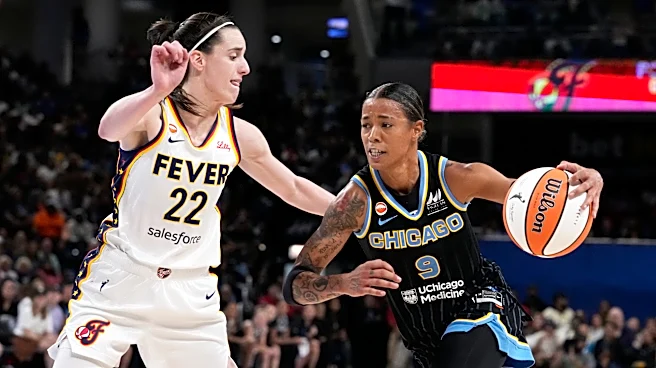
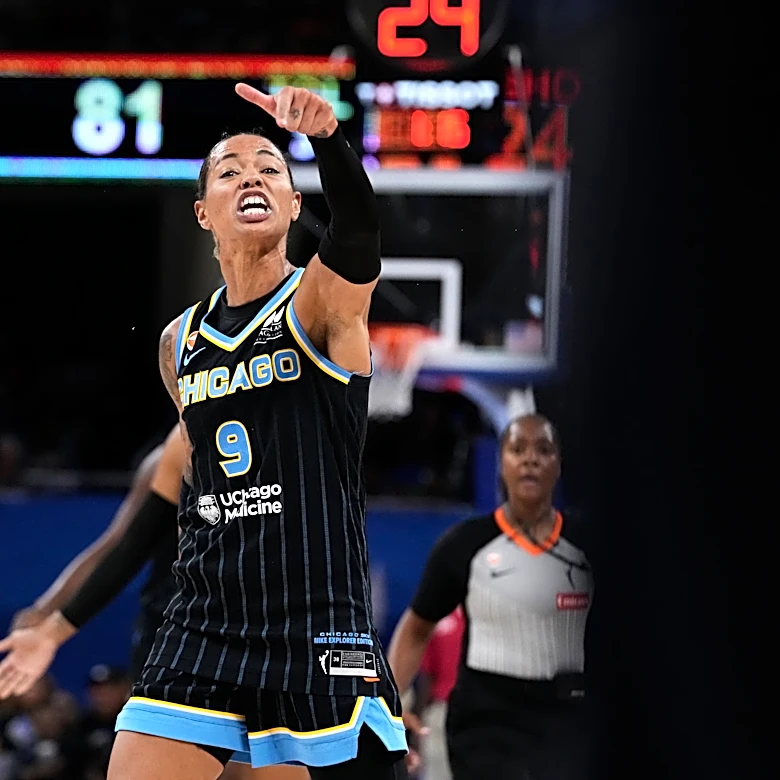
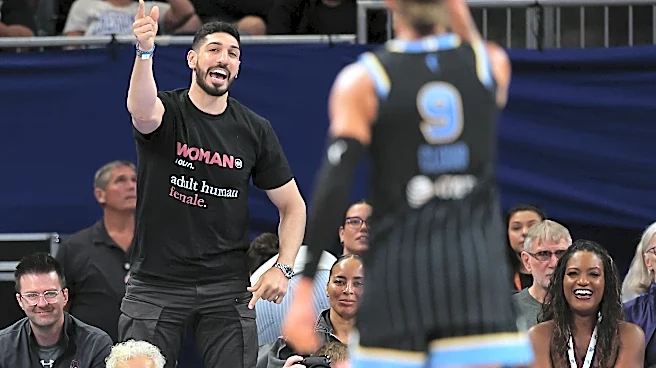
Chicago Sky owner Michael Alter has banned former NBA player Enes Kanter Freedom from attending any future Chicago home games. This decision follows a confrontation between Freedom and Sky guard Natasha Cloud during a recent game against the Indiana Fever.
Cloud, after scoring, approached Freedom, who was sitting courtside wearing a shirt with the phrase 'WOMAN noun. adult human female.' Cloud began yelling and pointing at Freedom, who then stood and stepped onto the court before security and other Sky players intervened. Cloud later stated she would not discuss 'irrelevant' individuals and instead emphasized focusing on critical issues affecting women and children, such as domestic violence, sexual assault, and food insecurities. She applauded the Sky's front office for taking action to 'protect the players.'
Why It's Important?
This incident highlights the ongoing and often contentious public discourse surrounding gender identity and women's sports in the United States. The WNBA, in particular, has become a focal point for these debates, with discussions about the eligibility of transgender women in the league. While the WNBA's collective bargaining agreement restricts participation to women, it lacks specific language regarding gender identity or sex assigned at birth. The Sky's decision to ban Freedom underscores a stance by a professional sports organization to prioritize player well-being and potentially mitigate disruptions caused by such confrontations. This event could influence how other sports leagues and organizations address similar situations, balancing freedom of expression with the need to maintain a safe and focused environment for athletes and fans. The strong viewership numbers for the WNBA game, despite the controversy, also indicate a growing public interest in the league, which could be further impacted by how these social issues are managed.
What's Next?
The ban on Enes Kanter Freedom from Chicago Sky home games is a definitive step by the team's ownership. It remains to be seen if other WNBA teams or the league itself will adopt similar policies regarding individuals who engage in disruptive behavior or express controversial views at games. The broader debate about transgender athletes in women's sports is likely to continue, potentially leading to calls for more explicit guidelines from sports governing bodies. Natasha Cloud's emphasis on 'real issues' affecting women may shift the conversation towards social challenges like domestic violence and food insecurity, potentially prompting increased advocacy and awareness campaigns from athletes and organizations. The incident could also spark further discussions among fans and the media about the role of activism and protest within professional sports venues.
Beyond the Headlines
The confrontation between Natasha Cloud and Enes Kanter Freedom transcends a simple sports incident, touching upon deeper societal tensions regarding gender, identity, and public discourse. Freedom's choice of attire and presence at a WNBA game, coupled with Cloud's strong reaction, reflects a clash of ideologies that is increasingly prevalent in American society. The incident raises questions about the boundaries of protest and expression in public spaces, particularly at sporting events, and the responsibilities of organizations to manage such conflicts. Furthermore, Cloud's redirection of the conversation to issues like domestic violence and sexual assault highlights a desire among some athletes to use their platforms to address what they perceive as more pressing societal concerns, rather than engaging in debates they deem 'irrelevant.' This event could contribute to a broader cultural shift where athletes are increasingly expected, or choose, to take public stances on social and political issues, influencing both fan engagement and the public image of sports leagues.