


What's Happening?
Former NBA champion and current ESPN analyst Kendrick Perkins has fiercely criticized Golden State Warriors General Manager Mike Dunleavy Jr. for what he perceives as a lackluster performance in free agency. Perkins argues that the Warriors' recent moves,
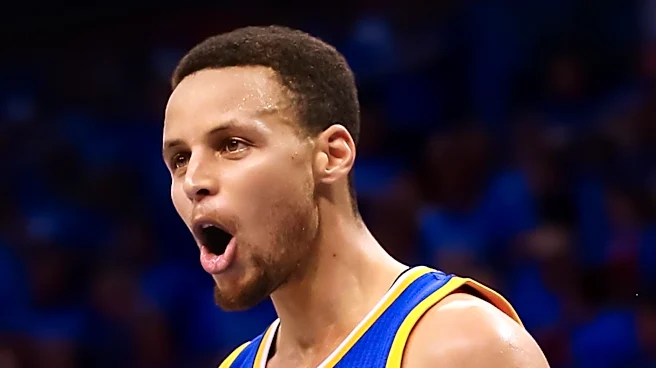
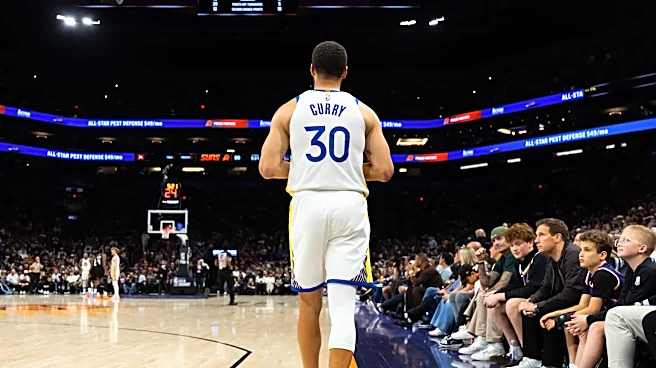
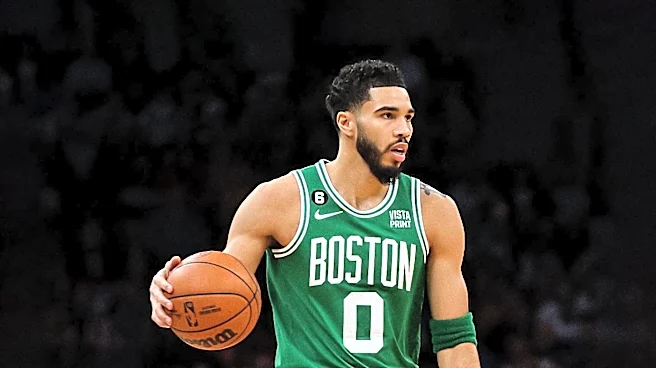
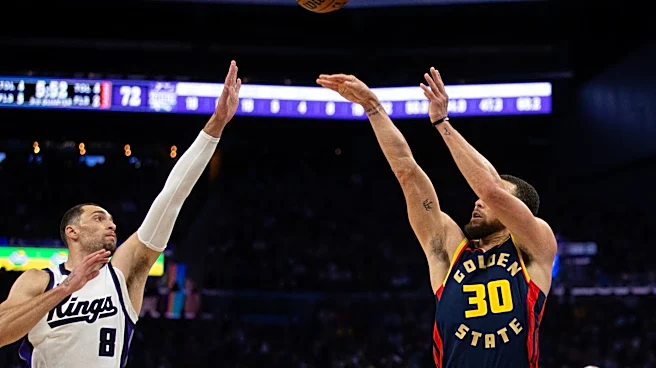
which include signing a few players and re-signing several veterans, are insufficient to maximize the remaining championship window of star player Stephen Curry. Perkins, who won a championship with the Boston Celtics in 2008, believes that the Warriors are failing to adequately support Curry, whom he considers the greatest player in Bay Area history, by not surrounding him with enough quality talent. He emphasized that Dunleavy Jr. needs to "do his damn job" to ensure Curry has the best chance to win another championship.
Why It's Important?
This criticism from a prominent NBA analyst like Kendrick Perkins highlights the immense pressure on front-office executives in professional sports, particularly when dealing with a generational talent like Stephen Curry. For the Golden State Warriors, the decisions made by General Manager Mike Dunleavy Jr. directly impact the team's competitiveness and the legacy of its star player. The perceived inaction in free agency could lead to a decline in team performance, potentially affecting fan engagement, merchandise sales, and overall franchise value. In the broader U.S. sports landscape, such critiques often fuel public debate among fans and media, influencing team management strategies and player expectations. The financial implications are also significant, as a less competitive team can impact revenue streams from broadcasting rights, sponsorships, and ticket sales.
What's Next?
Following Perkins's public criticism, Mike Dunleavy Jr. and the Warriors' front office will likely face increased scrutiny from fans, media, and potentially even within the organization. The team's performance in the upcoming season will be a direct measure of the effectiveness of their free agency strategy. If the Warriors struggle, the pressure on Dunleavy Jr. to make significant roster changes or acquisitions will intensify. Conversely, if the team performs well, it could validate their current approach. This situation also puts Stephen Curry in a challenging position, as his championship aspirations are directly tied to the team's ability to acquire and retain top-tier talent. Future trade deadlines and next year's free agency period will be crucial for the Warriors to address these concerns and demonstrate their commitment to maximizing Curry's remaining years.
Beyond the Headlines
Beyond the immediate sports narrative, this situation touches on the complex dynamics of team building, player legacy, and the business of professional sports. It raises questions about the balance between long-term organizational strategy and the short-term imperative to win championships, especially when a team has a superstar nearing the end of their prime. The criticism also reflects the evolving role of sports analysts, who increasingly influence public opinion and put pressure on team executives. Furthermore, it highlights the emotional investment of fans in their teams and players, and how front-office decisions can either fulfill or frustrate those expectations. The debate over whether the Warriors are adequately supporting Stephen Curry is not just about basketball; it's about the intersection of athletic excellence, strategic management, and the passionate culture of sports fandom.