




What's Happening?
The third annual Chicago Fashion Week, held from October 8-18, distinguished itself by blending fashion with other art forms, including dance and music. Events took place across various city locations, from art galleries to fabric stores. A significant
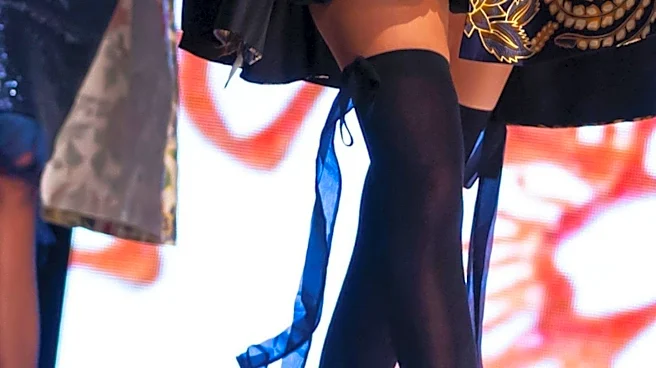
highlight was the 'Stories, a Fashion-in-Motion Event,' which featured sustainable clothing brand Indyvin by designer Stephanie Nugent. Nugent, drawing from her 30-year career in experimental dance, incorporated body movement to showcase her fall 2026 collection, which included dresses, pants, blouses, jackets, skirts, and overalls made from deadstock materials. Another key event, 'Surround Sound of Fashion,' one of the city's longest-running independent fashion shows since 2008, integrated music and culture with designs from nine local designers. This event featured DJs and a saxophonist, providing a lively soundtrack for models presenting ready-to-wear collections with an avant-garde twist, including fur coats, upcycled jackets, and experimental leather garments.
Why It's Important?
Chicago Fashion Week's unique approach of integrating fashion with dance and music is important for the U.S. fashion scene as it broadens the definition of a fashion show, transforming it into a multi-sensory artistic experience. This innovative format not only entertains but also highlights the interdisciplinary nature of creative expression, potentially inspiring other fashion weeks to explore similar artistic collaborations. The strong emphasis on sustainable fashion, particularly the use of deadstock materials, reflects a growing commitment within the U.S. industry to address environmental concerns and promote ethical production practices. By showcasing local designers and providing a platform for emerging talent, Chicago Fashion Week contributes to the decentralization of fashion influence, moving beyond traditional fashion capitals and fostering regional creative economies. This focus on local talent and sustainable practices can serve as a model for other cities looking to develop their own distinct and impactful fashion events, promoting both artistic innovation and responsible consumption.
What's Next?
The success of Chicago Fashion Week's integrated artistic approach suggests a potential trend for future fashion events in the U.S., where interdisciplinary collaborations become more common. Designers and event organizers may increasingly look to incorporate elements of dance, music, and other performing arts to create more immersive and memorable experiences. The focus on sustainable and avant-garde designs is likely to continue, pushing the boundaries of conventional fashion and encouraging innovation in material use and design philosophy. Local fashion scenes across the U.S. might gain more prominence as events like Chicago Fashion Week demonstrate the viability and impact of regional platforms. This could lead to increased investment in local talent and infrastructure, fostering a more diverse and geographically distributed fashion industry. The continued emphasis on sustainability will also likely drive further consumer awareness and demand for ethically produced clothing, influencing purchasing decisions and brand strategies nationwide.
Beyond the Headlines
The blending of fashion with other art forms, as seen in Chicago Fashion Week, speaks to a deeper cultural shift towards experiential consumption and the blurring of artistic boundaries. It challenges the traditional perception of fashion as merely clothing, elevating it to a form of performance art and storytelling. This approach can foster a more engaged and critically aware audience, encouraging them to consider the narrative and artistic intent behind garments. The commitment to sustainable practices, particularly the use of deadstock materials, highlights a growing ethical consciousness within the industry, moving beyond mere trends to address systemic environmental issues. This reflects a broader societal concern for ecological impact and resource management. Furthermore, the spotlight on local designers and the creation of a distinct regional fashion identity contribute to cultural diversity and economic empowerment at a grassroots level, counteracting the homogenizing effects of global fashion trends. It underscores the idea that fashion can be a powerful tool for community building and cultural expression, reflecting local values and artistic visions.