





What's Happening?
Shares of SK hynix, a South Korean semiconductor firm specializing in high-performance memory chips, fell 8.5% in morning trading. This decline is attributed to lingering investor worries regarding the profitability of artificial intelligence (AI) and
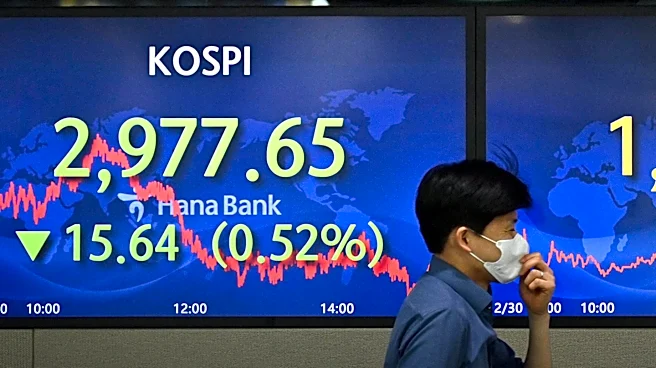
the high valuations of AI-related stocks. The broader market sentiment saw South Korea's Kospi index plunge 6.2%, with Samsung Electronics also experiencing a significant drop of 9.9%, and SK hynix itself falling 11.1% in the Kospi. These movements reflect a market-wide reassessment of whether substantial investments in AI technology will yield sufficient returns to justify current stock prices and capital outlays in the memory semiconductor sector. The company's stock has been volatile, with 33 moves greater than 5% in the last year, and is currently trading 48.4% below its 52-week high.
Why It's Important?
The downturn in SK hynix's stock, alongside other major semiconductor players, signals a critical shift in investor confidence within the AI sector. This development is important for the U.S. technology and financial markets as it indicates a potential cooling of the previously overheated AI investment landscape. U.S. semiconductor companies like Micron, AMD, Marvell Technology, and Arm Holdings also experienced declines, suggesting a broader reevaluation of valuations across the industry. If doubts about AI profitability persist, it could lead to reduced investor demand for hardware and chip suppliers, impacting companies that are heavily invested in AI infrastructure. This could affect the pace of AI development and deployment, potentially slowing innovation or shifting investment priorities within the U.S. tech ecosystem.
What's Next?
The market will likely continue to scrutinize the profitability and long-term returns of AI investments. Investors will be closely watching for concrete evidence that new AI technologies can generate sufficient profit to justify the heavy spending and high valuations currently seen in the sector. Further volatility in semiconductor stocks, including those in the U.S., can be expected as the market seeks to establish a more sustainable valuation for AI-related companies. Companies like SK hynix may need to demonstrate clearer pathways to profitability from their AI-related ventures to regain investor confidence. The ongoing reassessment could lead to a more conservative investment environment for AI hardware and chip suppliers in the near future.
Beyond the Headlines
This market correction highlights a fundamental tension between technological innovation and financial sustainability. While AI promises transformative capabilities, the current investor skepticism underscores the challenge of translating cutting-edge technology into consistent, tangible profits. This situation could prompt a re-evaluation of business models within the AI industry, pushing companies to focus more on immediate revenue generation and less on speculative growth. It also raises questions about the broader economic implications of AI, particularly how quickly and effectively AI applications can be integrated into existing industries to create new value. The current market sentiment could also influence regulatory discussions around AI, as governments might become more cautious about supporting technologies that are perceived as financially unstable.