





What's Happening?
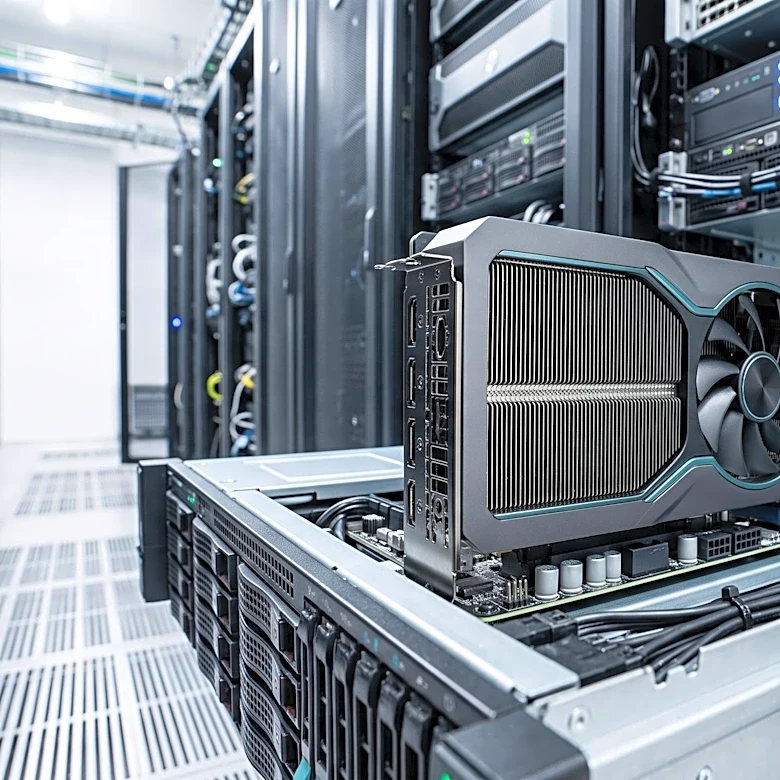
A recent migration from EC2 to Lambda Managed Instances (LMI) for GPU podcast rendering has resulted in significant efficiency gains. The weekly podcast render time was cut from 5.2 hours to 1.1 hours, representing a 79% reduction in GPU time. Concurrently,
the cost per episode dropped from approximately $4.60 to $2.16. This improvement was achieved by leveraging LMI's GPU support, which became available in November, allowing for serverless scaling without the need for infrastructure management. The process involves an AI agent orchestrating the pipeline, with speech generation handled by CPU Lambdas and GPU functions rendering video clips. A key aspect of this optimization was the use of g6e L40S instances, which deliver clips in 9.9 seconds each, a substantial improvement over the 30 seconds per clip on the previous g5 setup. The system also incorporates IAM policies to ensure that the AI agent can orchestrate the pipeline but cannot directly control GPU spending, maintaining human approval for critical steps.
Why It's Important?
This development is important for businesses and content creators in the U.S. who rely on GPU-intensive tasks, particularly in media production like video podcasts. The substantial reduction in both processing time and cost demonstrates the potential for serverless GPU solutions to optimize operational expenses and accelerate content delivery. For smaller businesses or independent creators, this could democratize access to high-performance computing resources, enabling them to produce professional-grade content more affordably. The implementation of IAM-enforced agent boundaries also highlights a growing trend in AI governance, ensuring that automated systems operate within defined parameters and human oversight is maintained for critical resource allocation. This balance between automation and control is crucial as AI becomes more integrated into business operations, particularly in areas involving significant computational costs.
What's Next?
The technology behind this migration, specifically Lambda Managed Instances with GPU support, is expected to become more widely adopted. The Video Podcast Generator, which currently runs on GPU containers, is slated for an update to utilize LMI, making this serverless GPU pipeline accessible to other AWS users. This will allow more businesses to deploy similar cost-effective and efficient rendering solutions. Further optimizations in GPU instance types and model tuning are likely to continue, pushing down rendering times and costs even further. The emphasis on IAM policies for AI agents suggests a future where automated processes are tightly integrated with security and cost control mechanisms, potentially leading to more sophisticated governance models for AI-driven workflows across various industries.
Beyond the Headlines
The shift to serverless GPU rendering has broader implications beyond immediate cost and time savings. It signifies a move towards more agile and scalable infrastructure for media production, which can adapt quickly to fluctuating demands without significant upfront investment in hardware. This could foster innovation in content creation, allowing for more complex visual effects and higher quality productions to be developed by a wider range of creators. Ethically, the controlled autonomy of AI agents, where human approval is required for GPU resource allocation, sets a precedent for responsible AI deployment in resource-intensive applications. This approach helps mitigate risks associated with uncontrolled AI spending and ensures that human decision-making remains central to critical operational processes, even as automation advances.