







What's Happening?
William Shatner, widely recognized for his role as Captain James T. Kirk in 'Star Trek,' had a significant early television appearance in the 1960s crime drama 'The Fugitive.' Shatner featured in Season 3, Episode 12, titled 'Stranger in the Mirror,'
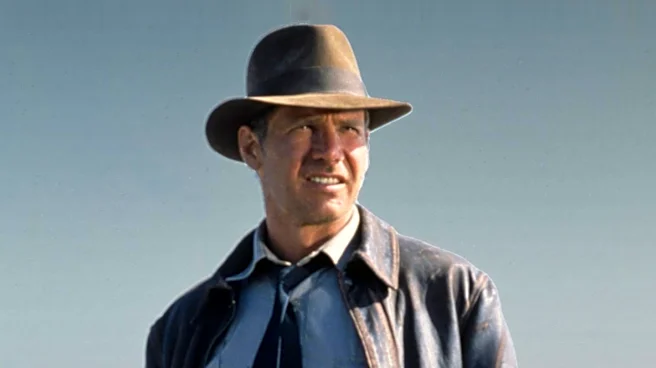
portraying Tony Burrell. In this episode, Burrell, an ex-cop with a terminal health condition, becomes involved in a murder investigation where Dr. Richard Kimble is the primary suspect. The plot thickens as Burrell threatens to expose Kimble, only for a twist to reveal Burrell himself as the murderer of three police officers. This television series, which ran from 1963 to 1967, was critically acclaimed and Emmy-winning. Years later, it inspired a highly successful 1993 film adaptation starring Harrison Ford and Tommy Lee Jones, which garnered seven Academy Award nominations, including Best Picture. The film depicted a wrongfully convicted vascular surgeon on the run, seeking the real perpetrator of a crime and aiming to expose a pharmaceutical conspiracy.
Why It's Important?
This historical context of William Shatner's career highlights the foundational roles that shaped his acting prowess before his iconic 'Star Trek' fame. His performance in 'The Fugitive' demonstrates his versatility and early dramatic capabilities, which are crucial for understanding the depth of his acting career beyond a single, defining character. The series' critical success and subsequent adaptation into a major motion picture underscore its lasting cultural impact and narrative strength. For the entertainment industry, this illustrates how compelling television narratives can transcend mediums and generations, influencing future productions and solidifying the careers of actors involved. The film's success, in turn, showcased the enduring appeal of the 'wrongfully accused' narrative, a trope that continues to resonate with audiences and influence storytelling in both television and cinema.
What's Next?
While the original 'The Fugitive' series and its film adaptation are historical events, their legacy continues to influence contemporary entertainment. The enduring popularity of such narratives suggests that similar themes of justice, pursuit, and conspiracy will likely be revisited in future television shows and films. For actors like William Shatner, early roles like this contribute to a comprehensive career retrospective, often explored in documentaries, biographies, or retrospectives on classic television. The success of the 1993 film could also inspire further reboots or spin-offs of 'The Fugitive' franchise, potentially introducing the story to new generations of viewers. Additionally, the recognition of classic television series often leads to their availability on streaming platforms, allowing new audiences to discover these foundational works.
Beyond the Headlines
The story of 'The Fugitive,' both the series and the film, delves into profound themes of justice, identity, and the fallibility of legal systems. William Shatner's role as a hidden antagonist in the series adds a layer of psychological complexity, challenging audience perceptions of good and evil. This narrative structure, where the true villain is unexpectedly revealed, explores the darker aspects of human nature and the potential for deception. The film adaptation further amplified these themes, using the framework of a medical conspiracy to critique corporate ethics and the pursuit of truth against powerful institutions. Culturally, 'The Fugitive' has become a benchmark for the thriller genre, influencing countless stories about individuals fighting against overwhelming odds to clear their names. It also highlights the evolution of storytelling from episodic television to big-screen adaptations, demonstrating how compelling narratives can be reinterpreted and expanded for different audiences and formats.