





What's Happening?
The LEAF (Leading an Ecological and Accessible Food System) program, a four-year collaboration between Stone Barns Center for Food & Agriculture and Columbia Climate School, is showing significant success in addressing food insecurity in the South Bronx.
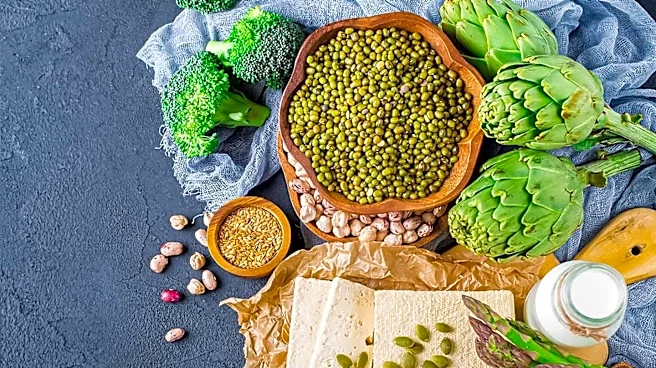
Operating in the nation's poorest congressional district, LEAF combines food distribution with educational opportunities in gardening, cooking, and healthy eating. Participants receive bi-weekly distributions of regeneratively produced food, home gardening kits with seedlings, bilingual growing instructions, and nutrition education materials. They also visit Stone Barns for farm tours. A paper published in the journal Sustainability detailed statistically significant increases in fruit and vegetable consumption, comfort with gardening, and SNAP participation among participants. The program boasts a 99% retention rate from year one to year two, indicating strong community engagement and positive impact. LEAF emphasizes a community-participatory research approach, actively listening to and responding to participants' needs, fostering trust and a sense of ownership within the community.
Why It's Important?
The LEAF program offers a replicable model for combating food insecurity in the U.S., particularly as federal budget cuts impact similar initiatives. Its integrated approach, combining food access with education and community engagement, demonstrates that sustained, holistic programs can lead to significant behavioral changes and improved health outcomes. For communities facing high poverty rates and diet-related diseases, LEAF's success highlights the importance of culturally sensitive, community-driven interventions. The statistically significant increases in fruit and vegetable consumption and gardening comfort directly address critical public health challenges. This model could influence future policy decisions and funding allocations for food access programs, advocating for comprehensive, long-term solutions over one-off interventions. It also strengthens the case for 'food is medicine' initiatives and promotes the broader adoption of ecological food systems that benefit both human and environmental health.
What's Next?
The LEAF consortium plans to expand its research from a cross-sectional study to a quasi-experimental one. This will involve collecting more comprehensive data through surveys, focus groups, interviews, and objective measures like participants' carotenoid levels, which directly correlate with fruit and vegetable intake. The goal is to publish this data as open source, making LEAF a replicable model for other communities and organizations. Researchers hope these findings will further strengthen the case for 'food is medicine' initiatives, promote ecological food systems, and potentially influence government policies to address food insecurity more effectively. The program's continued success and expansion could lead to broader adoption of its integrated approach in other underserved areas across the U.S., fostering healthier communities and more resilient local food systems.
Beyond the Headlines
The LEAF program's success extends beyond mere food distribution; it cultivates a sense of community, empowerment, and self-sufficiency. By providing gardening kits and education, it reconnects participants with the process of food production, fostering a deeper appreciation for healthy eating and sustainable practices. The unexpected formation of a congenial community through a WhatsApp chat, where members share tips, recipes, and support, highlights the program's ability to build social capital and resilience. This holistic approach addresses not only physical hunger but also the psychological and social dimensions of food insecurity. It challenges negative narratives associated with impoverished zip codes by demonstrating that given choice and resources, communities are eager to grow their own food. This model could inspire a cultural shift towards greater food literacy and local food sovereignty, empowering individuals to take control of their health and food systems.