



What's Happening?
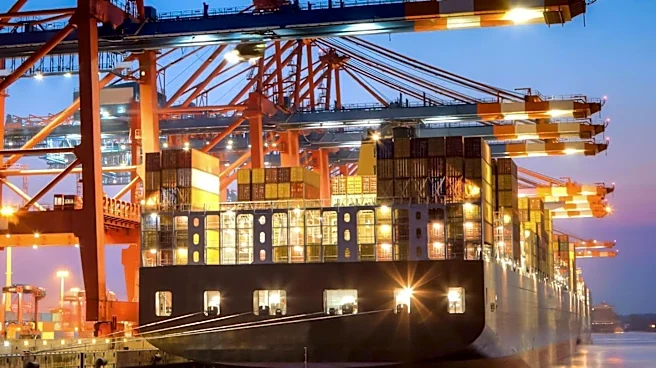
European ports are experiencing a decline in direct container connectivity as shipping lines restructure networks around non-EU hubs. This shift is driven by the European Union's carbon pricing regulations, which are prompting container lines to adjust
their routes to avoid the costs associated with the EU Emissions Trading System and FuelEU Maritime. A study by Spain's Puertos del Estado found that direct container connectivity fell by 5% at northern European Union ports and 18% in the eastern Mediterranean between January 2023 and March 2026. This restructuring is leading to a structural shift in maritime traffic, with carriers increasingly shifting calls and transshipment activities towards ports in the UK, Egypt, and Morocco.
Why It's Important?
The restructuring of shipping routes due to carbon pricing regulations has significant implications for the maritime industry and European trade. The reduction in direct connectivity at EU ports could impact the efficiency and cost of shipping goods to and from Europe, potentially affecting supply chains and trade balances. This shift may also lead to increased competition among non-EU ports, which could benefit from the redirected traffic. Additionally, the changes highlight the growing influence of environmental regulations on global trade and the need for ports and shipping companies to adapt to new regulatory landscapes.
What's Next?
As the EU continues to implement and enforce carbon pricing regulations, shipping companies and ports will need to further adapt their operations to comply with these rules. This may involve investing in cleaner technologies and alternative fuels to reduce emissions and avoid additional costs. The ongoing negotiations at the International Maritime Organization (IMO) regarding a Net-Zero Framework could also influence future shipping practices and regulations. Ports and shipping companies will need to stay informed about these developments and adjust their strategies accordingly to remain competitive in the evolving maritime industry.