





What's Happening?
Fiber to the Room (FTTR) technology is emerging as a solution to common home network issues like Wi-Fi dead zones and buffering. Unlike traditional Fiber to the Home (FTTH) setups that typically terminate at the living room, FTTR extends fiber optic cables
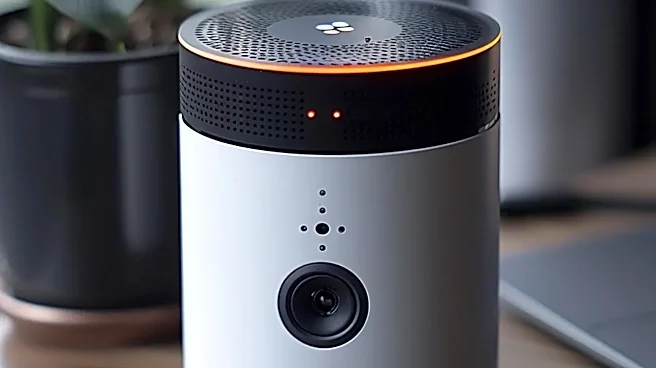
directly into individual rooms, such as bedrooms, home offices, and living spaces. This creates a high-speed, stable wired backbone throughout the entire house, ensuring consistent internet speed and stability regardless of location. The system relies on Optical Network Units (ONUs), with a main ONU connecting to the Internet Service Provider (ISP) and secondary ONUs placed in different rooms. These ONUs work together to broadcast a strong, unified Wi-Fi signal, overcoming the signal degradation that occurs when Wi-Fi passes through walls and other obstacles. The installation process involves planning the network layout, setting up the main ONU, carefully routing fiber optic cables, and installing secondary ONUs, followed by configuration and testing.
Why It's Important?
The adoption of FTTR technology is significant for U.S. households, particularly with the increasing demand for high-bandwidth activities like remote work, online gaming, and 4K streaming across multiple devices. By eliminating Wi-Fi dead zones and providing a stable, high-speed connection in every room, FTTR enhances productivity for remote workers, improves the experience for online gamers, and ensures seamless entertainment consumption. This technology offers a substantial upgrade over traditional Wi-Fi and even basic mesh systems, which often struggle with signal interference and weakening. For ISPs, offering FTTR could be a competitive differentiator, providing a premium internet experience. For consumers, it represents a long-term investment in home connectivity that can significantly improve daily digital life and potentially increase property value by future-proofing the home network infrastructure.
What's Next?
As the demand for robust home networks continues to grow, FTTR is likely to see increased interest and adoption. ISPs may begin to offer FTTR as a premium service or a standard option for new installations, especially in areas with high fiber optic penetration. The market for DIY FTTR installation kits and low-visibility fiber cables could also expand, empowering more homeowners to upgrade their networks independently. Further advancements in ONU technology and fiber optic cable design, such as even more bend-resistant and aesthetically discreet options, are anticipated. The integration of FTTR with smart home ecosystems will also be a key area of development, allowing for more seamless control and automation of connected devices throughout the entire home. Educational resources and professional installation services for FTTR are also expected to become more widely available to support this growing trend.
Beyond the Headlines
Beyond the immediate benefits of faster and more reliable internet, FTTR technology has broader implications for the future of smart homes and digital living. By providing a robust wired backbone, FTTR can support the increasing density of smart devices and the growing demand for local processing and edge computing within the home, reducing reliance on cloud services for certain functions. This could lead to more responsive and secure smart home systems. Furthermore, the widespread adoption of FTTR could influence home construction standards, with new homes potentially being pre-wired with fiber to every room. This shift could also foster innovation in home networking hardware and software, driving the development of new applications and services that leverage ubiquitous high-speed connectivity, ultimately transforming how U.S. households interact with technology and the digital world.