







What's Happening?
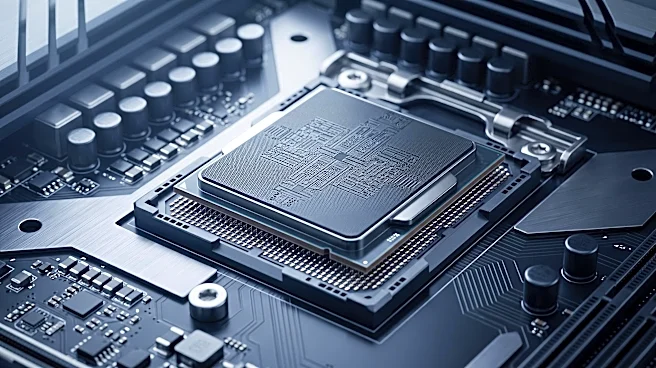
AMD CEO Lisa Su was instrumental in the decision to re-release the Ryzen 7 5800X3D processor, according to AMD's Travis Kirsch. This initiative was described as a 'final gift' to loyal users of the AM4 platform, providing them with an upgrade option for their
DDR4 systems. The re-release required restarting production lines, a process that took considerable time. This strategic move was planned before significant shifts in the memory market, and it was not intended as a direct solution to the DDR5 memory shortage. Despite the emergence of newer AM5 processors and DDR5 memory, the AM4 platform continues to demonstrate strong performance and market presence. Kirsch also noted that while AM5, which supports DDR5, has seen growth, AM4 shipments remained stable until memory price fluctuations began.
Why It's Important?
The decision by AMD to revive the Ryzen 7 5800X3D processor highlights a significant customer retention strategy within the competitive semiconductor industry. By offering a high-performance upgrade path for existing AM4 users, AMD reinforces brand loyalty and extends the lifecycle of its older platform. This move is particularly impactful for consumers who might be hesitant to transition to the newer, more expensive AM5 platform, which requires DDR5 memory. It provides a cost-effective alternative for PC gamers and enthusiasts looking to enhance their systems without a complete overhaul. This strategy could also influence market dynamics by maintaining demand for DDR4 components, potentially stabilizing prices or slowing the rapid adoption of DDR5. For AMD, it demonstrates a commitment to its long-standing customer base, which can translate into sustained market share and positive brand perception amidst evolving technological landscapes.
What's Next?
AMD's current strategy indicates a continued focus on supporting both AM4 and AM5 platforms. While the AM4 platform remains strong, the company anticipates growth in AM5 models, particularly those equipped with 3D V-Cache. AMD's next-generation Zen 6-based CPUs are expected to utilize the existing AM5 socket, with rumors suggesting increased clock speeds later this year. The company emphasizes platform lifespan as paramount for end-users, aiming to provide options for processor upgrades several years after initial platform purchase. AMD has not specified a timeline for the introduction of an AM6 socket, stating that a new platform will be introduced when the time is right, but not before. This suggests a prolonged commitment to the AM5 socket, potentially extending its relevance for several more years, possibly until 2029 or beyond.
Beyond the Headlines
The revival of the Ryzen 7 5800X3D by AMD, spearheaded by CEO Lisa Su, reflects a broader industry trend of balancing innovation with consumer value and sustainability. In a rapidly evolving tech landscape, companies often face the dilemma of pushing new technologies versus supporting legacy systems. AMD's approach demonstrates a strategic decision to cater to different segments of its user base, acknowledging that not all consumers are ready or willing to adopt the latest and most expensive hardware immediately. This could set a precedent for other hardware manufacturers to consider longer support cycles for their platforms, fostering greater customer satisfaction and potentially reducing electronic waste. It also underscores the importance of leadership vision, as Su's initial suggestion led to a product re-release that resonated positively with a significant portion of AMD's loyal customer base.